

Lucien Gibert
French ( b.1904 - d.1988 )
Ses Flamboyantes Mèches De Cheveux Auburn
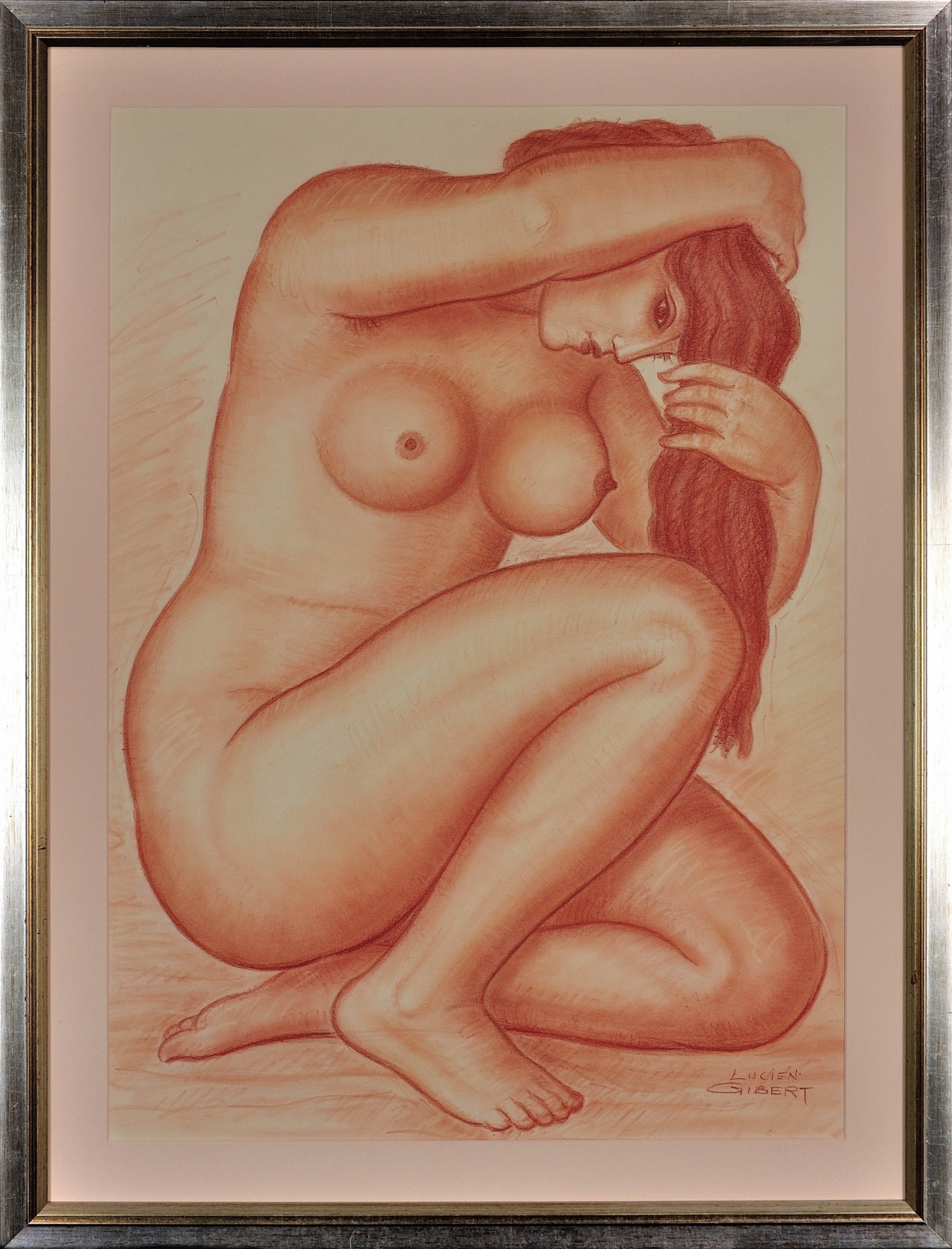
| Image size | 29.7 inches x 22.2 inches ( 68.5cm x 56.5cm ) |
| Frame size | 32.7 inches x 25 inches ( 83cm x 63.5cm ) |
£3,895.00
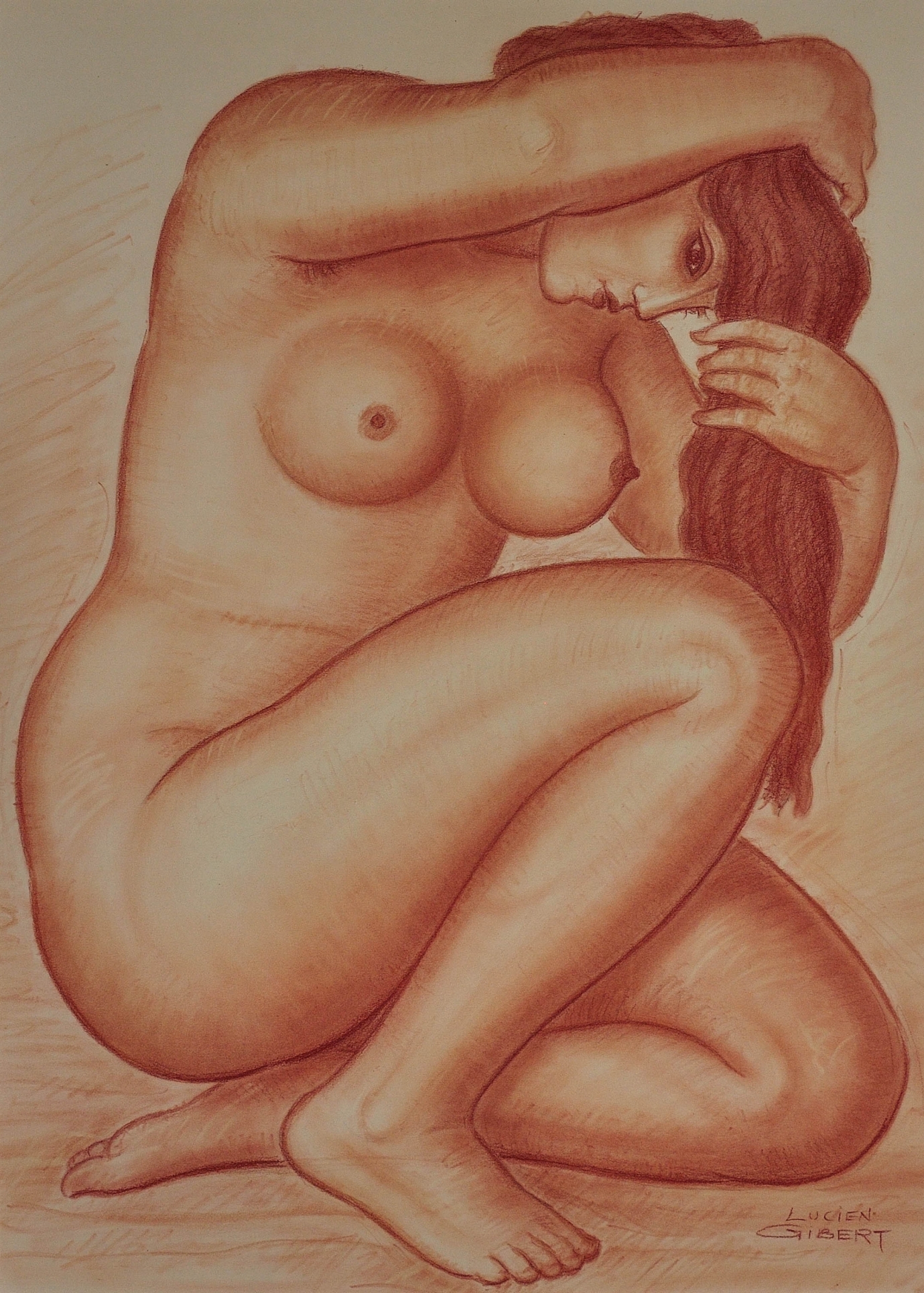
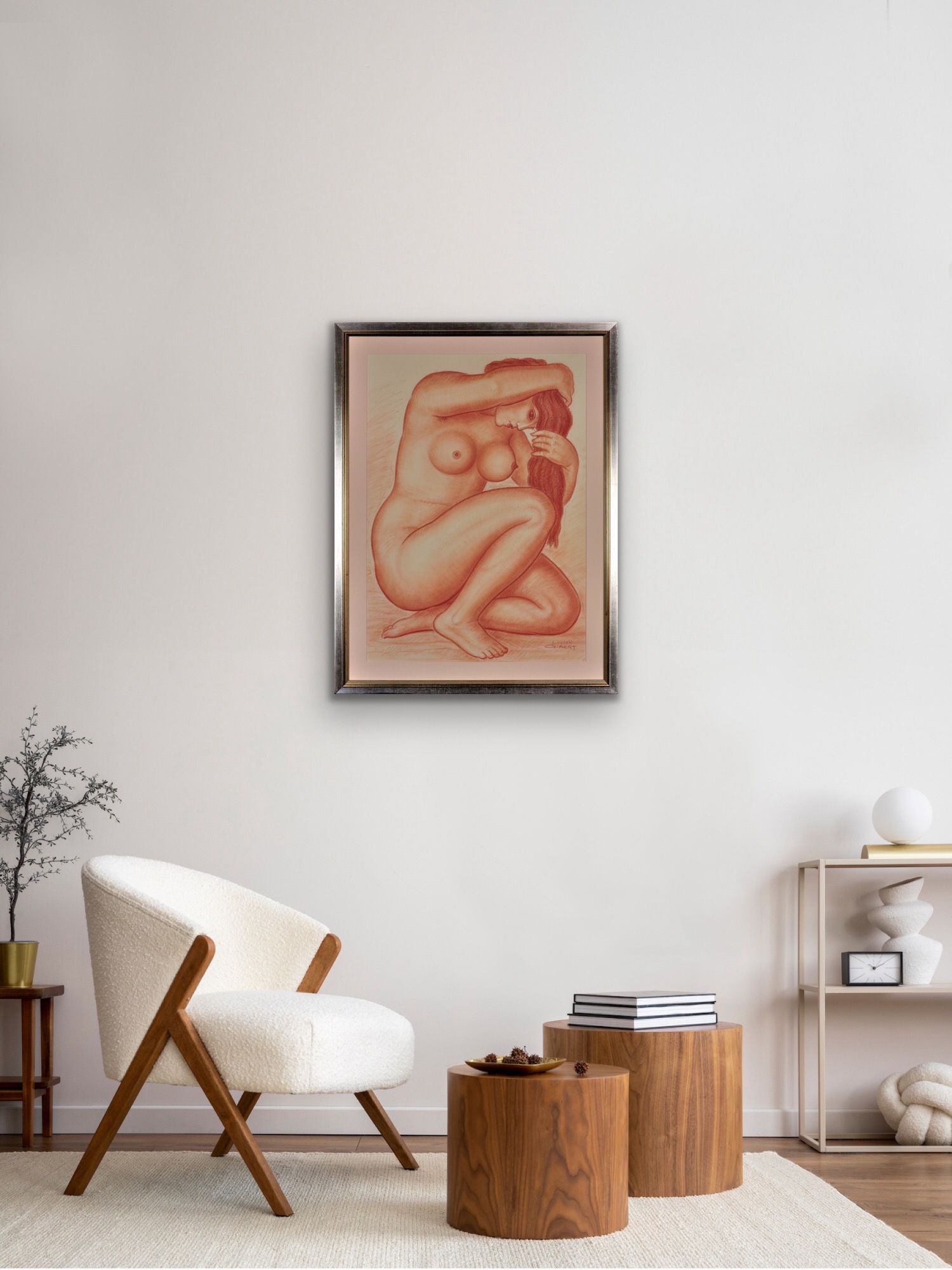
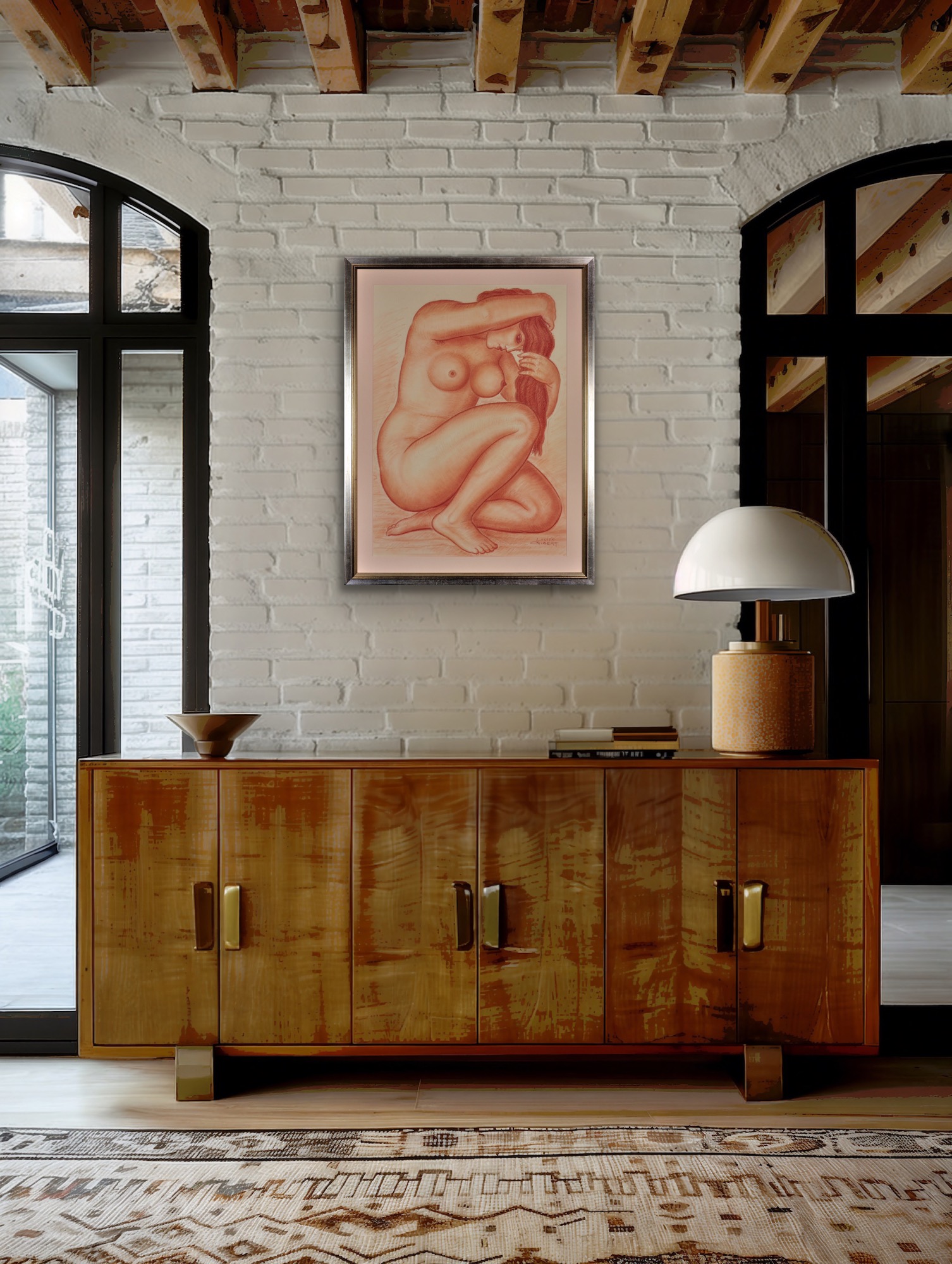
Available for sale from Big Sky Fine Art in the English county of Dorset, this original drawing in red chalk is by the French artist and sculptor Lucien Gibert and dates from around 1935.
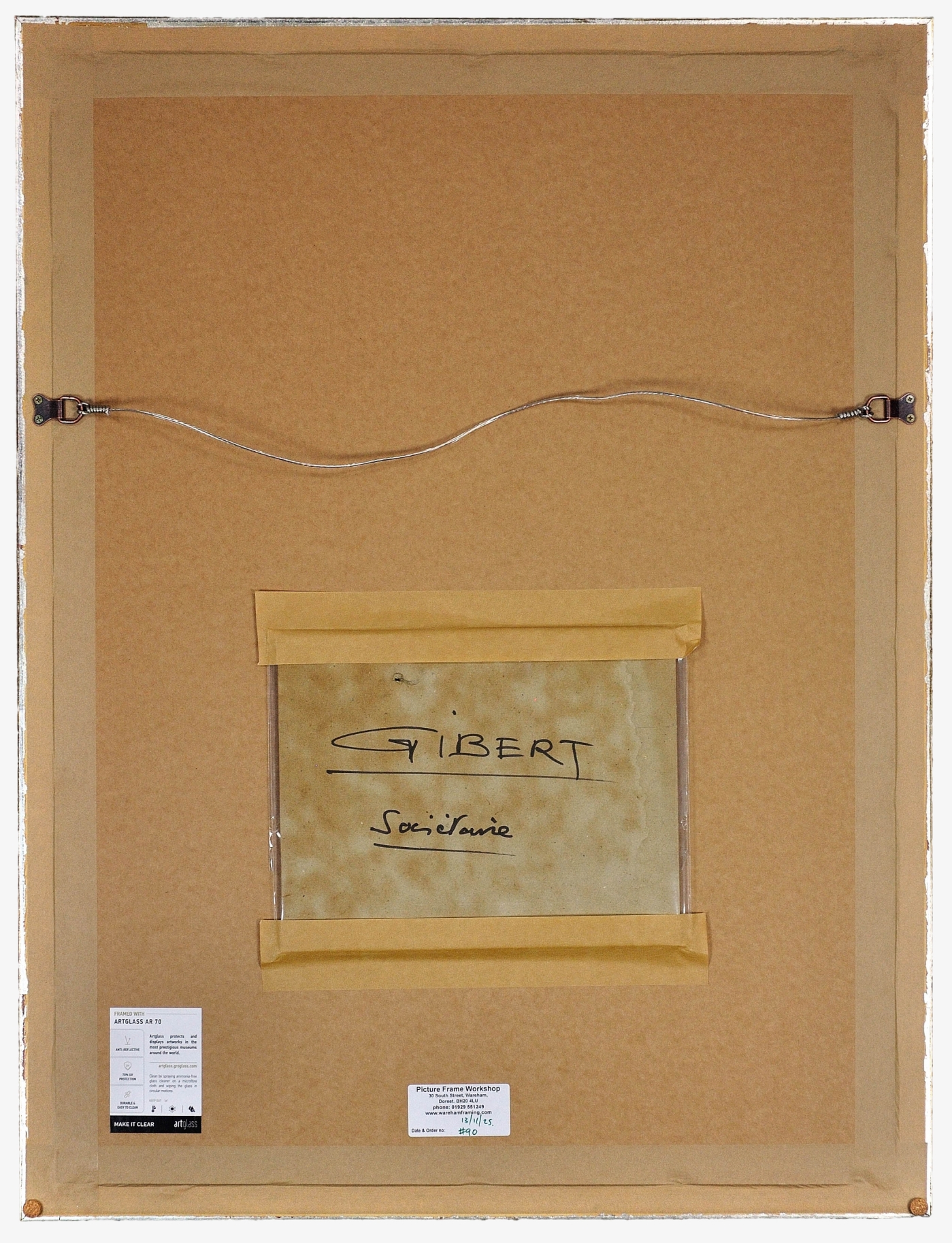
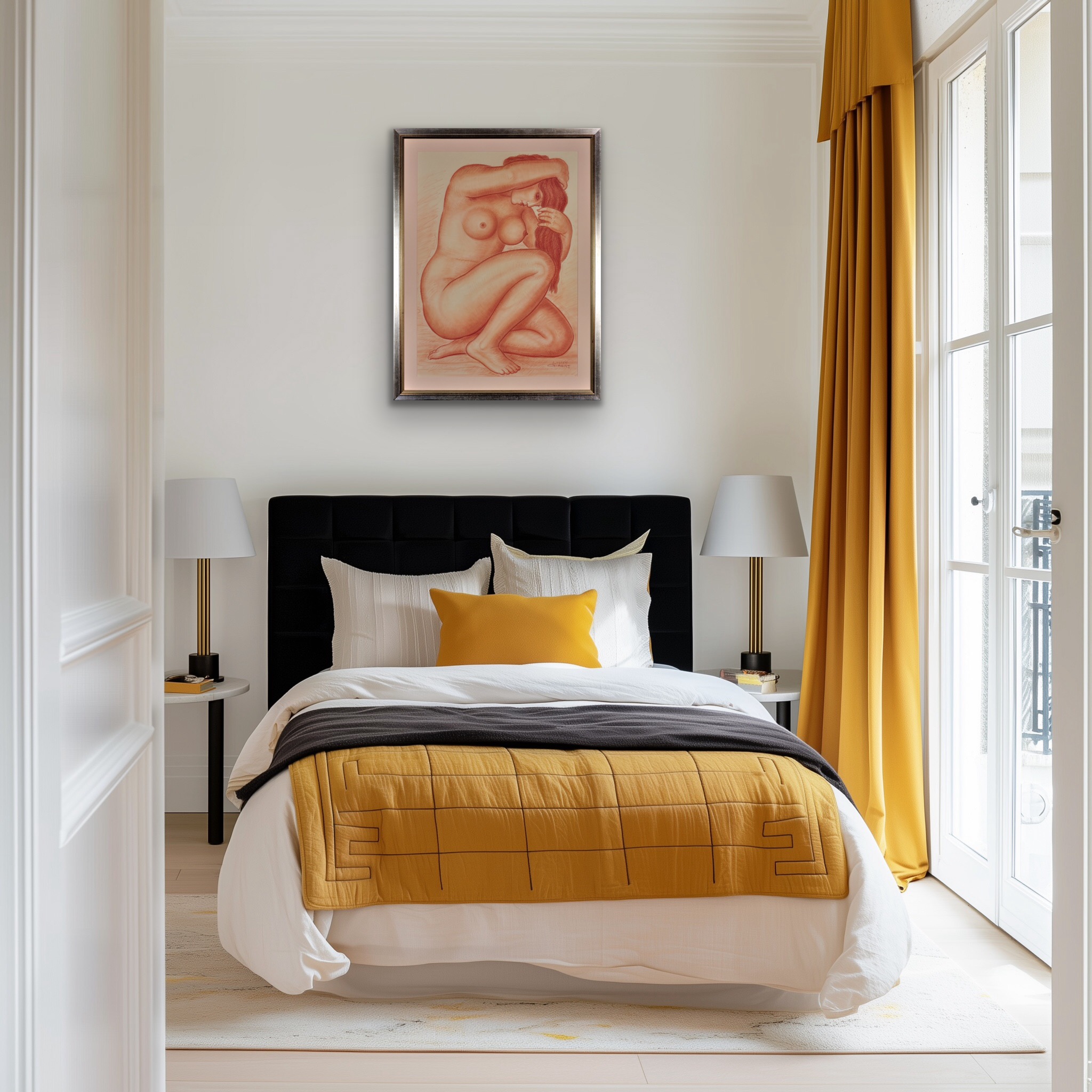
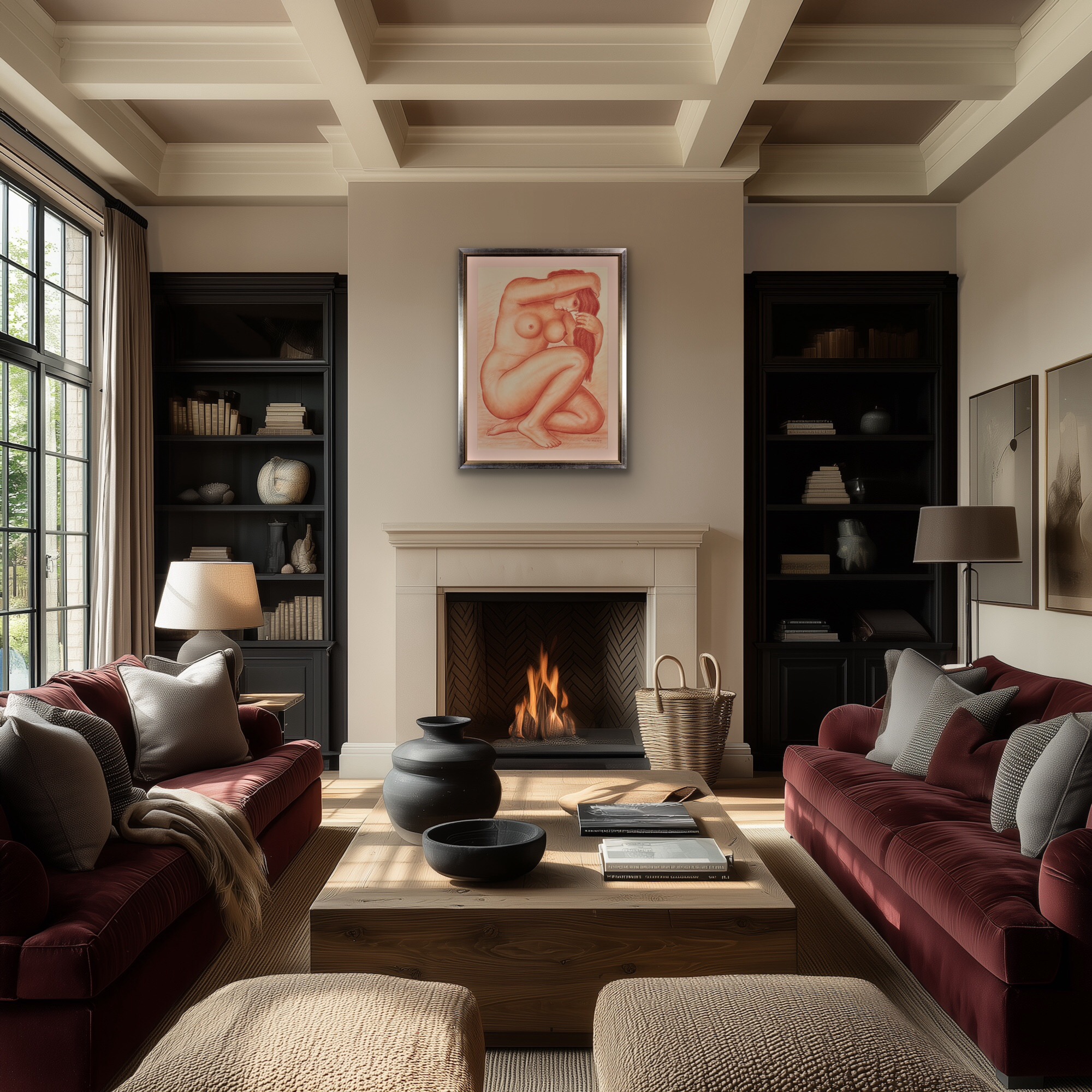
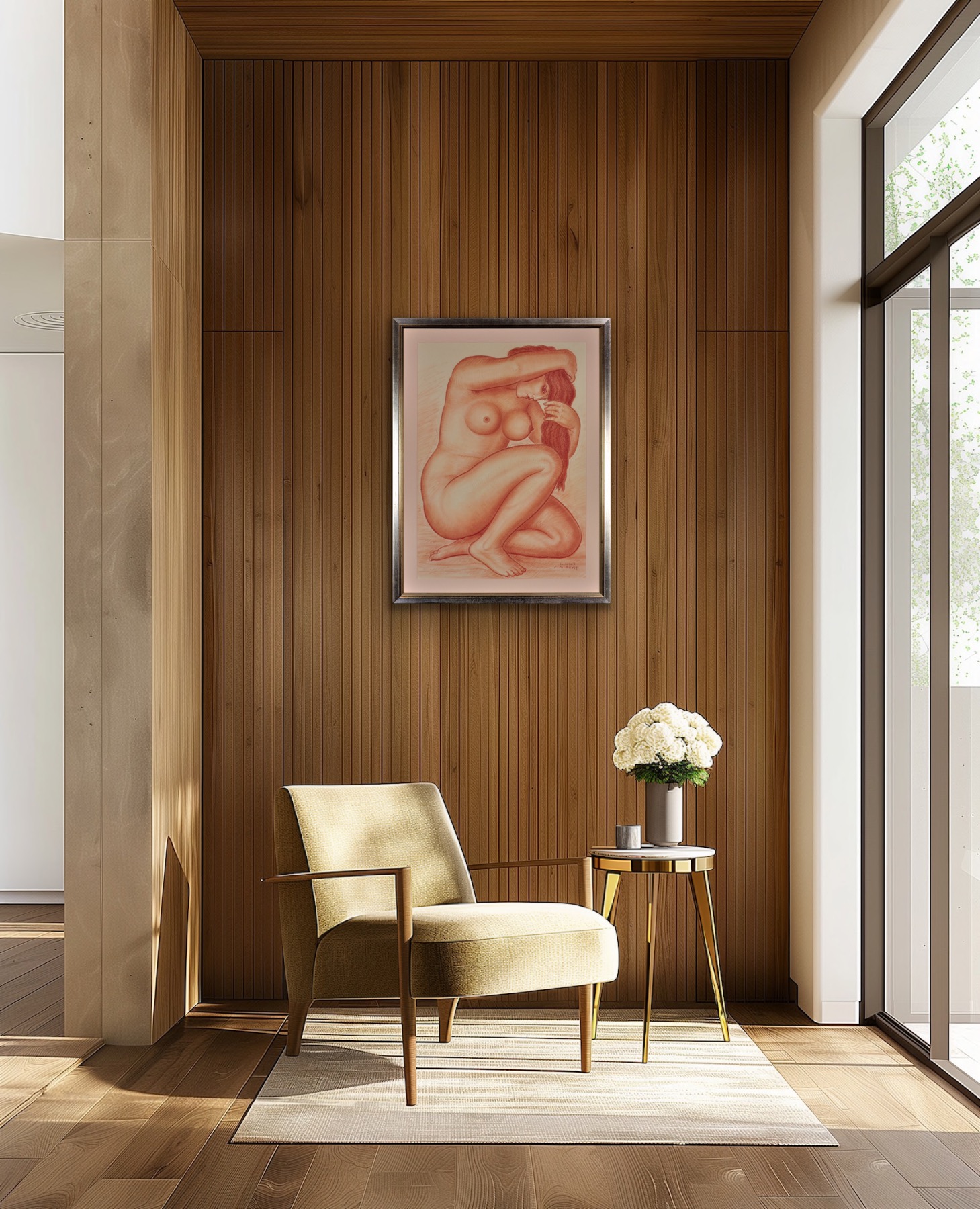
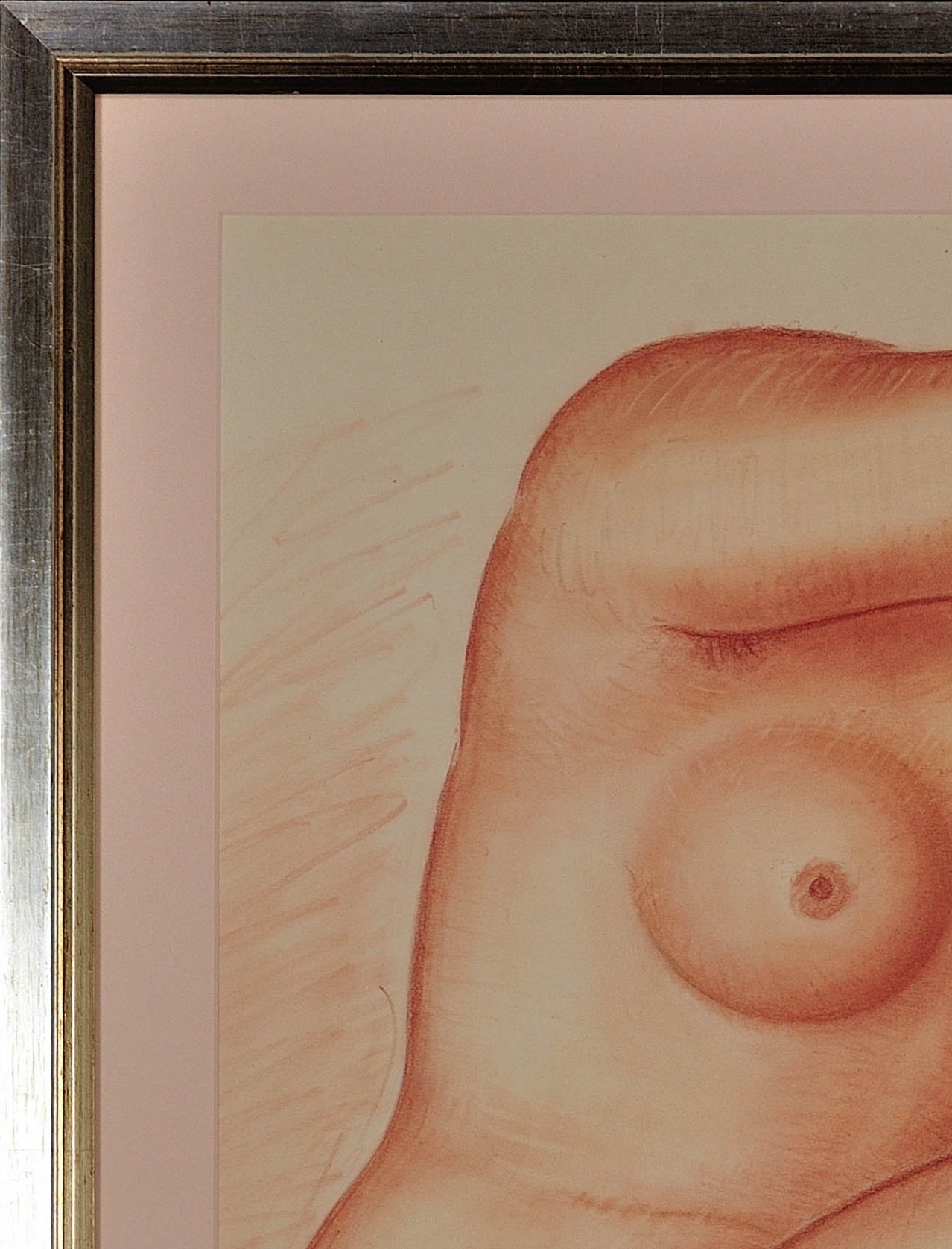
The drawing is presented and supplied in a sympathetic contemporary frame (which is shown in these photographs) and behind non-reflective ArtGlass AR 70®.
This vintage drawing is in a good condition. It wants for nothing and is supplied ready to hang and display.
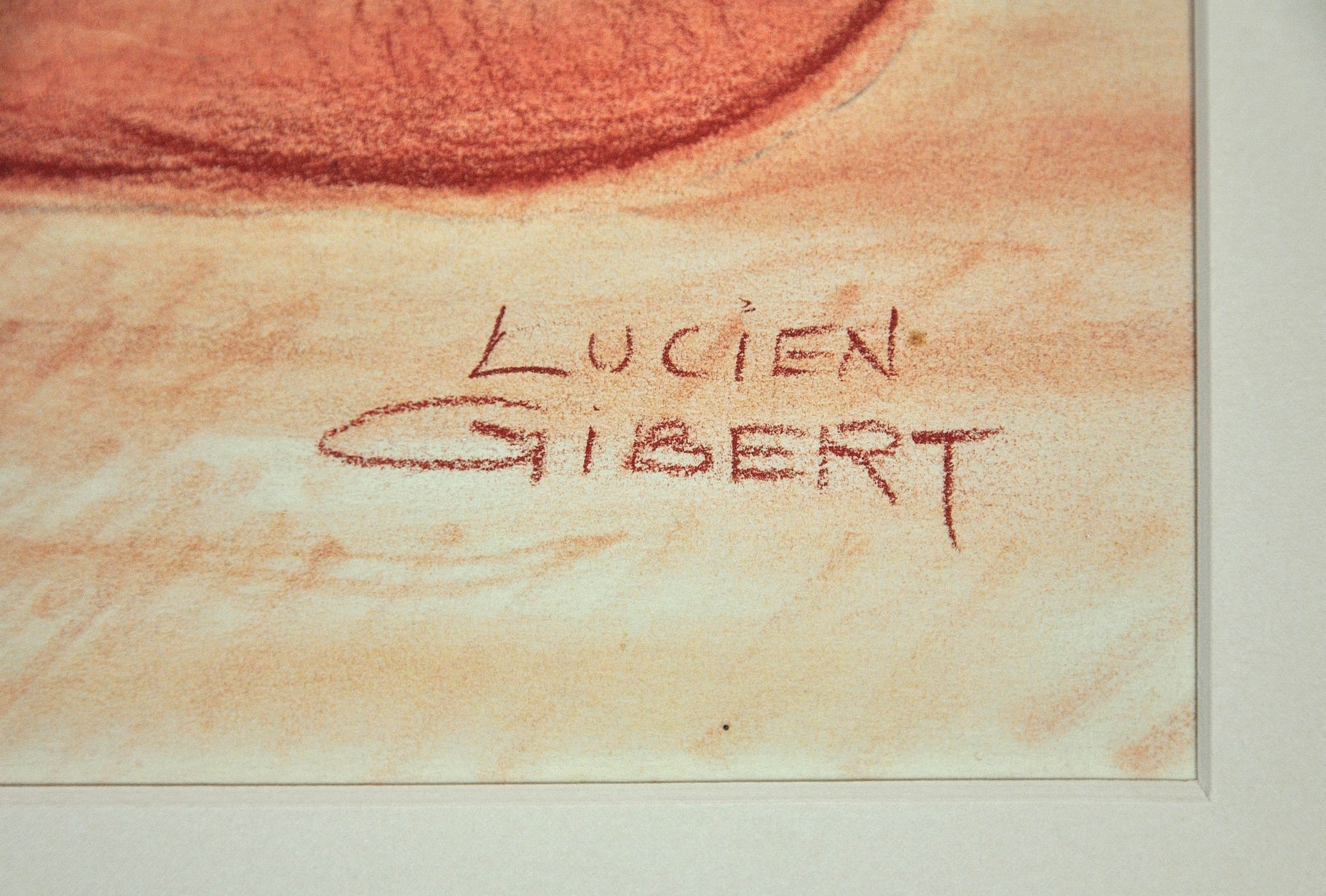
The drawing is signed lower right.
Lucien Gibert was a French sculptor and artist best known for his sensitive treatment of the human figure. Active primarily during the mid-20th century, Gibert developed a practice that combined rigorous academic training with a distinctly modern sense of form, restraint, and intimacy.
He was born in Saint-Etienne on 21st June 1904. His parents were Mélanie (nee Mathevot) and Pierre Victor Gibert. His father was a cabinetmaker, and it was in his workshop that the young Lucien found his flair for creative expression and began his training. He first enrolled at the Beaux-Arts in his native town, then in 1921 became a student at the Ecole des Beaux-Arts in Paris, where he studied in the studio of Jean Boucher. He remained there only a short time, then worked independently under the guidance of Charles Despiau, who guided his efforts towards less conventional art.
Gibert trained as a sculptor at a time when French art education continued to emphasise mastery of anatomy, drawing, and modelling. Throughout his career, he remained deeply committed to the study of the nude, regarding drawing as the essential foundation of sculptural practice. His works on paper—particularly studies in red chalk—reveal his sculptor’s eye for volume, balance, and structure, translating three-dimensional thinking into fluid, economical line. His drawings would have functioned both as preparatory studies and as independent works of art, valued for their immediacy and expressive warmth. His work as a sculptor was strongly influenced by Maillol, and he often practiced direct carving on traditional materials, mainly wood and stone.
Gibert began participating in exhibitions at the Salon des Artistes Français and the Salon des Independents from 1923. He never did a solo exhibition, but his reputation grew swiftly and he was soon receiving commissions for official monuments and public spaces.
In 1934, he produced a frame of six portrait medals, for which he was awarded a bronze medal and a travel grant from the Conseil Supérieur des Beaux-Arts, enabling him to travel to North Africa in 1935. He was amazed by what he saw and bought back drawings which were to inspire future works. In 1937 he was awarded to Gold Medal at the Paris International Exhibition.
In 1941, Gibert exhibited a plaster sculpture entitled “Danseuse Algérienne” at the Salon des Artistes Français, winning the Prix Vital-Cornu. The same bronze model was exhibited in 1943 at the Salon des Indépendants and at the Salon de la Société Coloniale des Artistes Français. In 1947 Gibert was awarded a scholarship by Afrique Équatoriale Française and he used this to travel first to Algeria, then the Sub-Saharan Africa, bringing back more sketches and photographs that inspired him to create sculptures that further enriched his already considerable body of work. These were exhibited at the Salon des Artistes Français.
In 1950 Gibert was made a Knight of the Legion of Honor. Much later in his career he was promoted to Officer of the same order and made Commander of the National Order of Merit. In 1954, he was awarded the Prix de ‘Algérie.
The journalist and director of the magazine ‘Le Peintre’ Jean Chabanon wrote of Gibert:
“This artist, who is mainly attached to the female model … thus asserts himself as a sculptor worthy of antique, heir to Rodin and Bourdelle, Maillol and Despiau, emulated by Georges Oudot and Volti. His mastery and talent qualify him to put a serious beauty on places and medals, in our stadiums and in our museums.”
Gibert’s work is enduring and public: he made many state commissions, such as Jeune Fille du Sud, which is exhibited at the Montpellier Museum and Femme au Bas, Maternity, which was exhibited at the Museum of Modern Art in Paris. He is also the author of more than two hundred medals for the Paris Mint, an institution of which he later became the Director. His groups with massive stone figures adorn the stadiums of Charléty, Courneuve, Rue Championnet.
Gibert married twice, in December 1923, and in April 1972.
He died on March 23rd 1988 in Paris and was buried in the Père-Lachaise cemetery.
Gibert’s artistic style aligns closely with the interwar tradition of modern classicism that flourished in France during the 1920s and 1930s. While aware of contemporary avant-garde movements, he favoured timeless subjects and clear, harmonious forms over radical abstraction. His figures are characterised by calm introspection, solid modelling, and a quiet sensuality, often depicted in private or contemplative poses rather than overtly dramatic compositions. Lucien Gibert continued to work steadily throughout his career, exhibiting in France and contributing to the enduring figurative tradition at a time of significant artistic change.
Today, his sculptures and drawings are appreciated for their craftsmanship, sensitivity, and classical poise, and his works on paper are increasingly sought after by collectors of 20th-century French figurative art and sculptors’ drawings. The works of this extraordinary artist can still be found in at least twenty museums in France and around the world.
© Big Sky Fine Art
This original red chalk drawing on paper by the French sculptor and artist Lucien Gibert (1904–1988) dates to around 1935 and is signed by the artist in the lower right. Executed during a formative period of Gibert’s career, the work demonstrates his deep engagement with the classical female nude and his sculptural understanding of the human form.
The drawing depicts a seated nude woman, captured in a private, introspective moment as she gathers her hair. Gibert’s confident use of red chalk allows for soft modelling and subtle tonal variation, emphasising the rounded volumes of the body and the natural rhythm of the pose. The figure is compact yet dynamic, with carefully observed anatomy and a strong sense of weight and balance—qualities that reflect the artist’s parallel practice as a sculptor.
The warm reddish tones of the chalk lend the work an intimate, timeless quality, recalling academic figure studies while also aligning with the interwar French tradition of modern classicism. The simplicity of the background focuses attention entirely on the figure, highlighting Gibert’s skill in rendering form through line, shading, and contour alone.
This accomplished 20th-century French nude drawing is a fine example of Lucien Gibert’s draughtsmanship and offers strong appeal to collectors of figurative art, academic studies, and works by sculptors on paper. Its subject, medium, and date make it particularly attractive within the context of 1930s French art and classical figure drawing.
 Ses Flamboyantes Mèches De Cheveux Auburn - Gibert, Lucien