


Charles Fouqueray
French ( b.1869 - d.1956 )
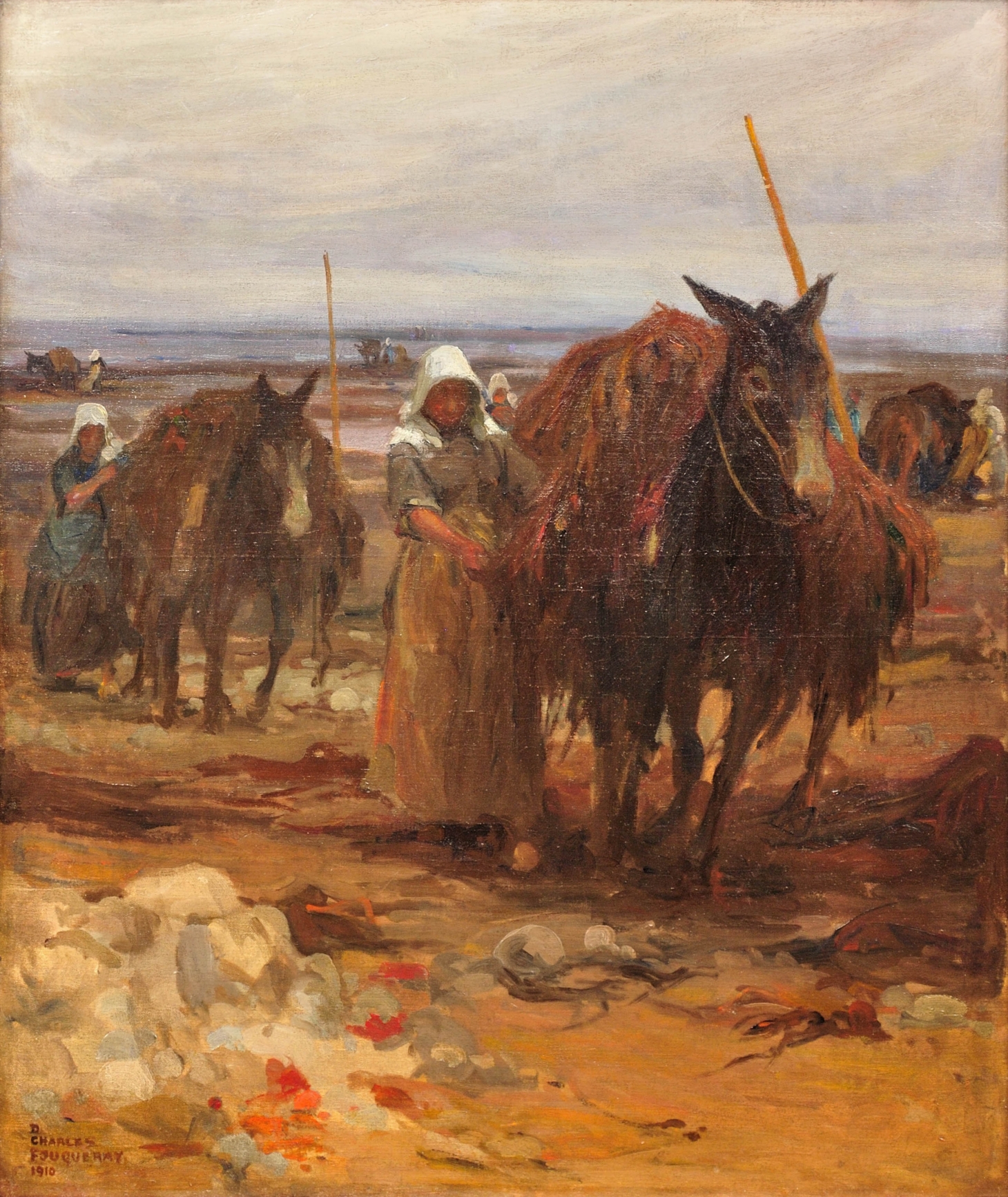
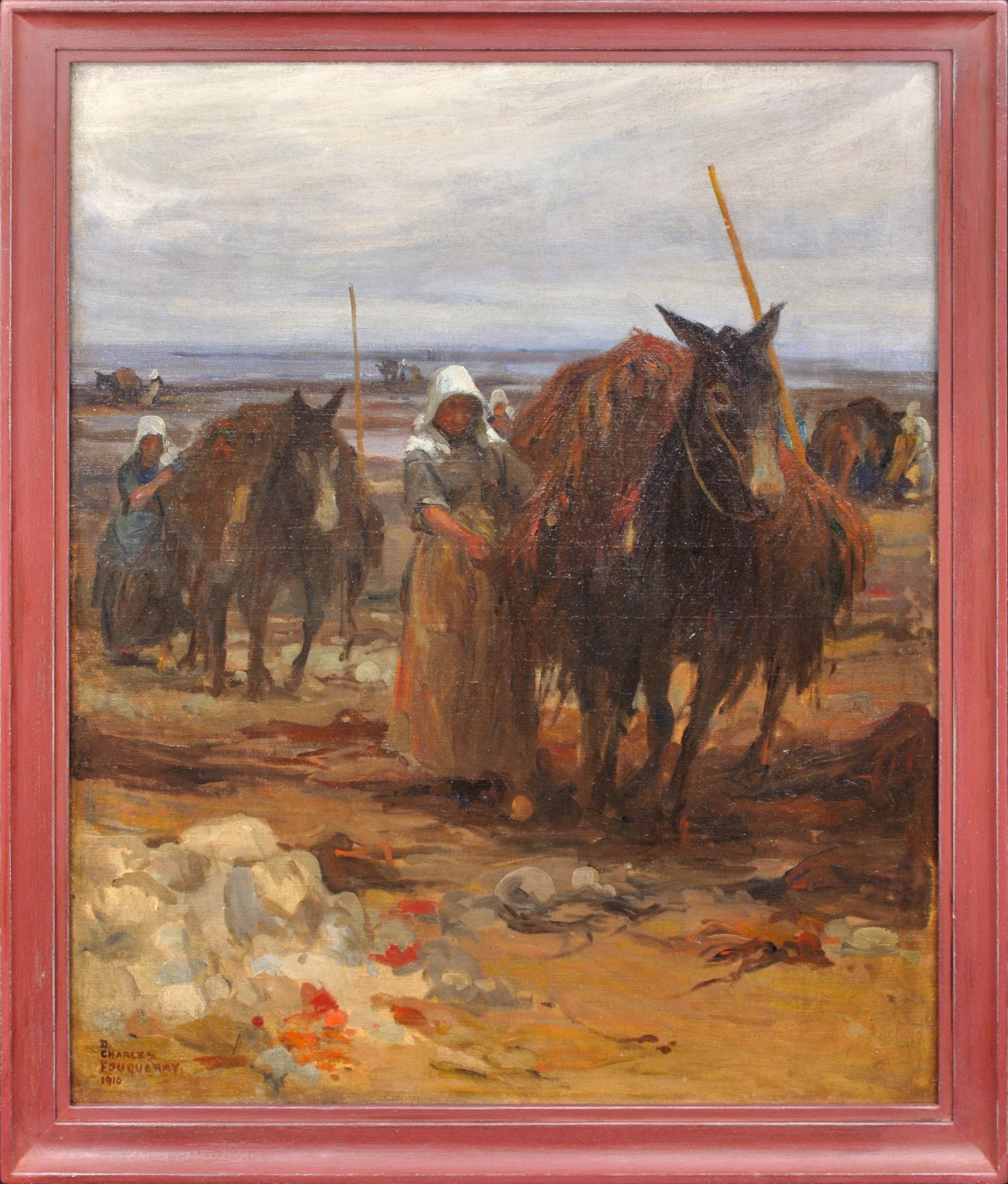
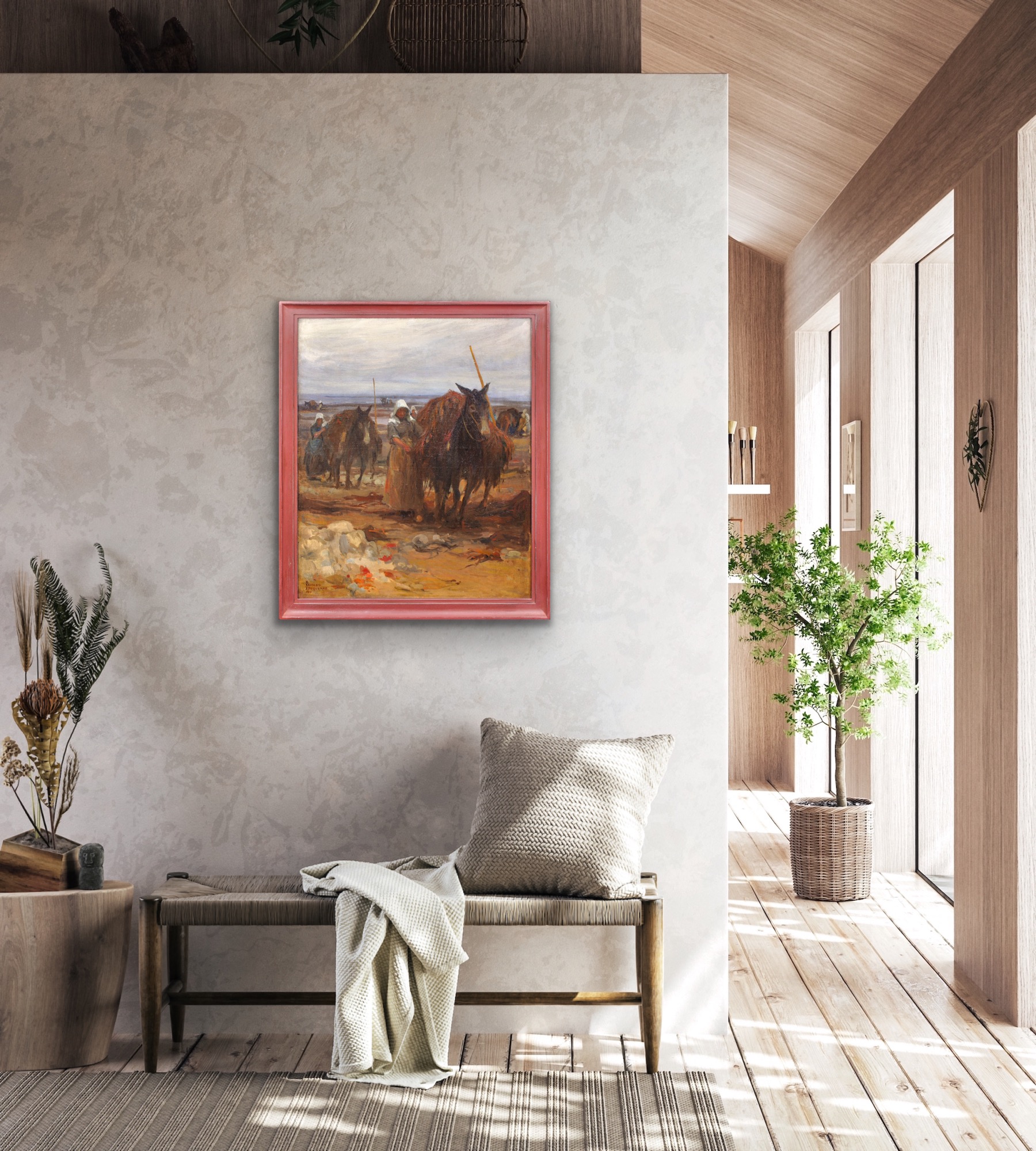
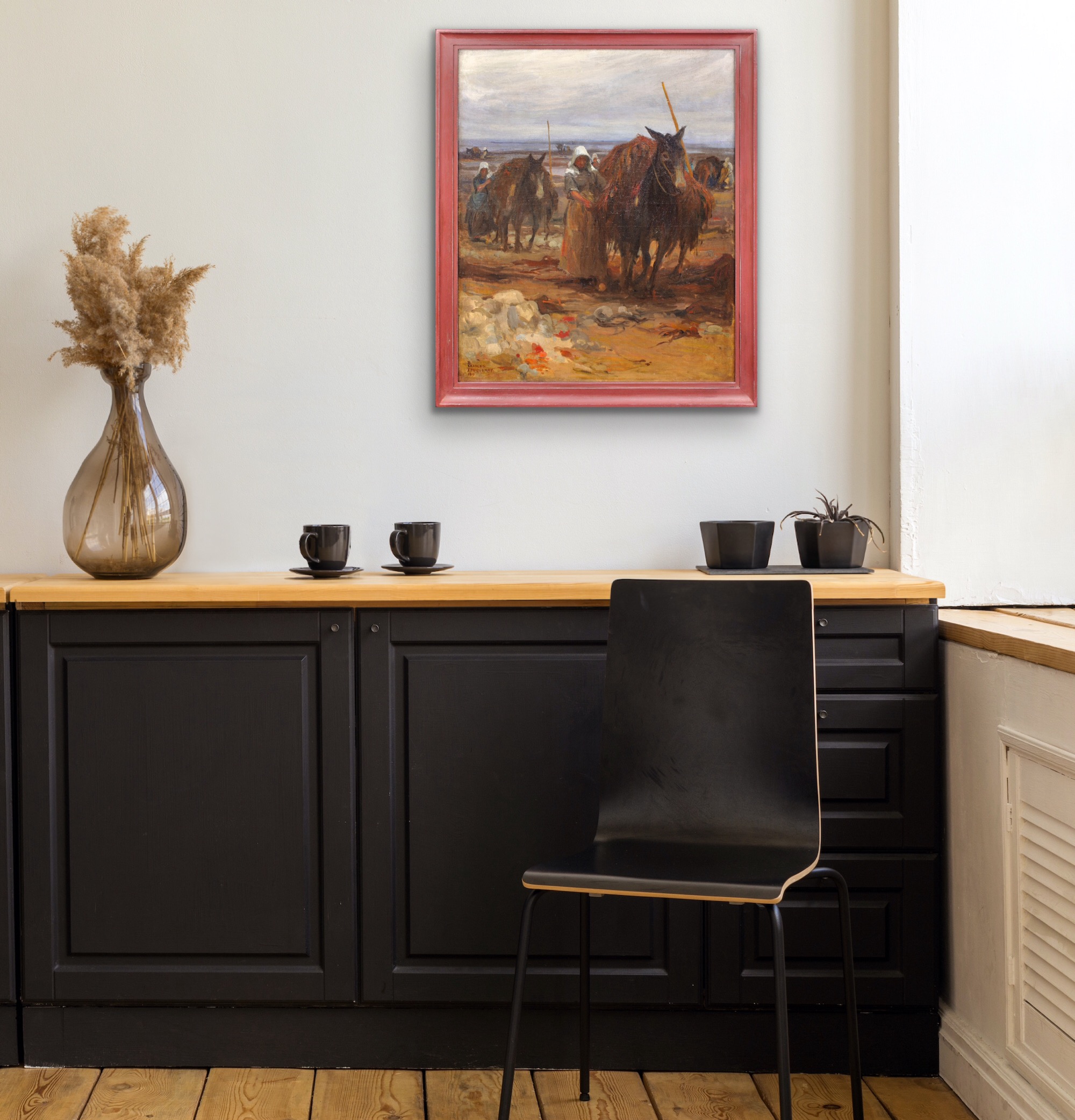
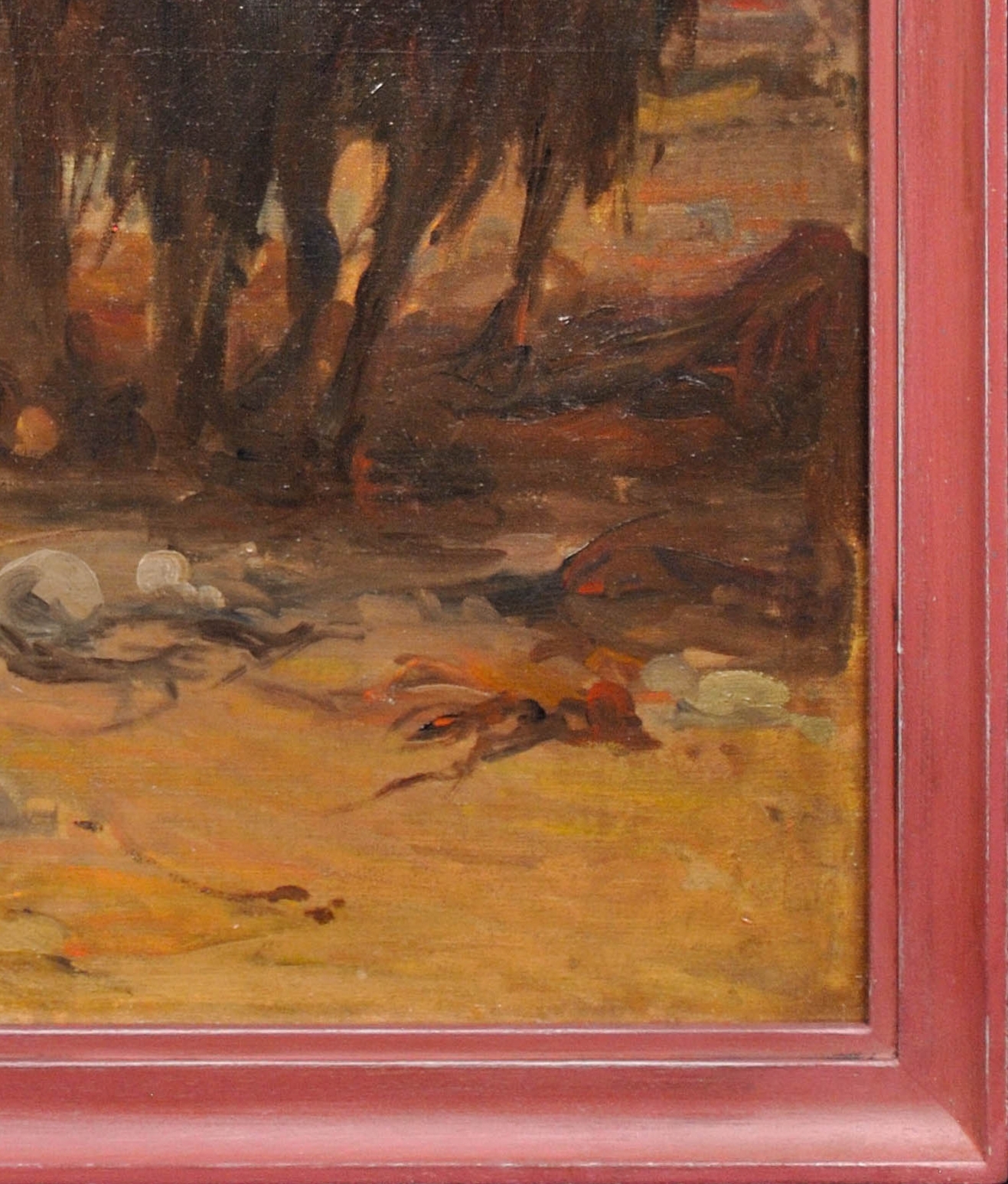
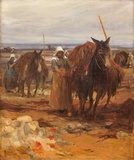
Ramasseurs De Goemon En Bretagne, 1910.......( "Seaweed Gatherers In Brittany" )
| Image size | 25 inches x 20.9 inches ( 63.5cm x 53cm ) |
| Frame size | 28.3 inches x 24 inches ( 72cm x 61cm ) |
£8,495.00
Available for sale from Big Sky Fine Art in the English county of Dorset, this original oil painting is by the French artist Charles Fouqueray and is dated 1910.
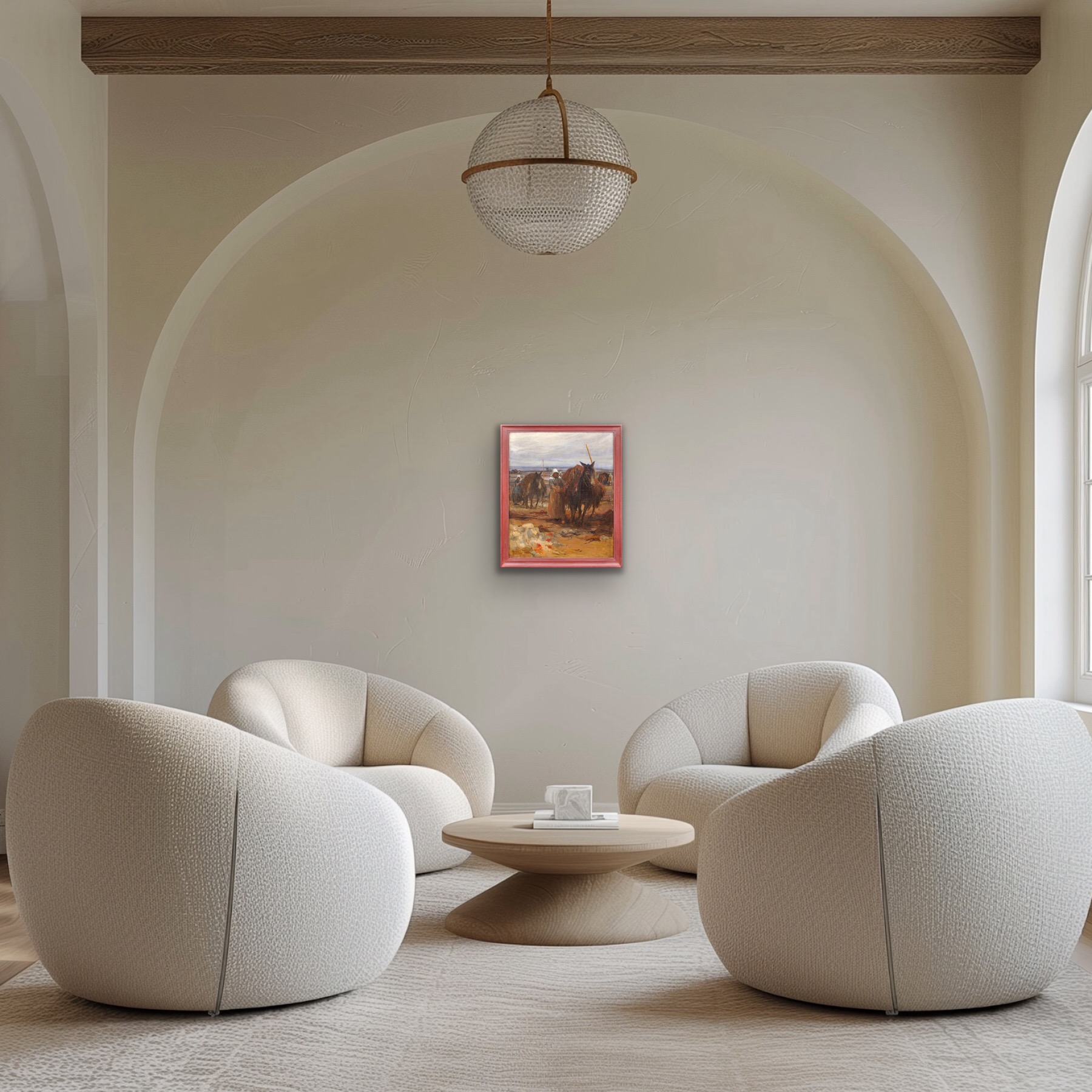
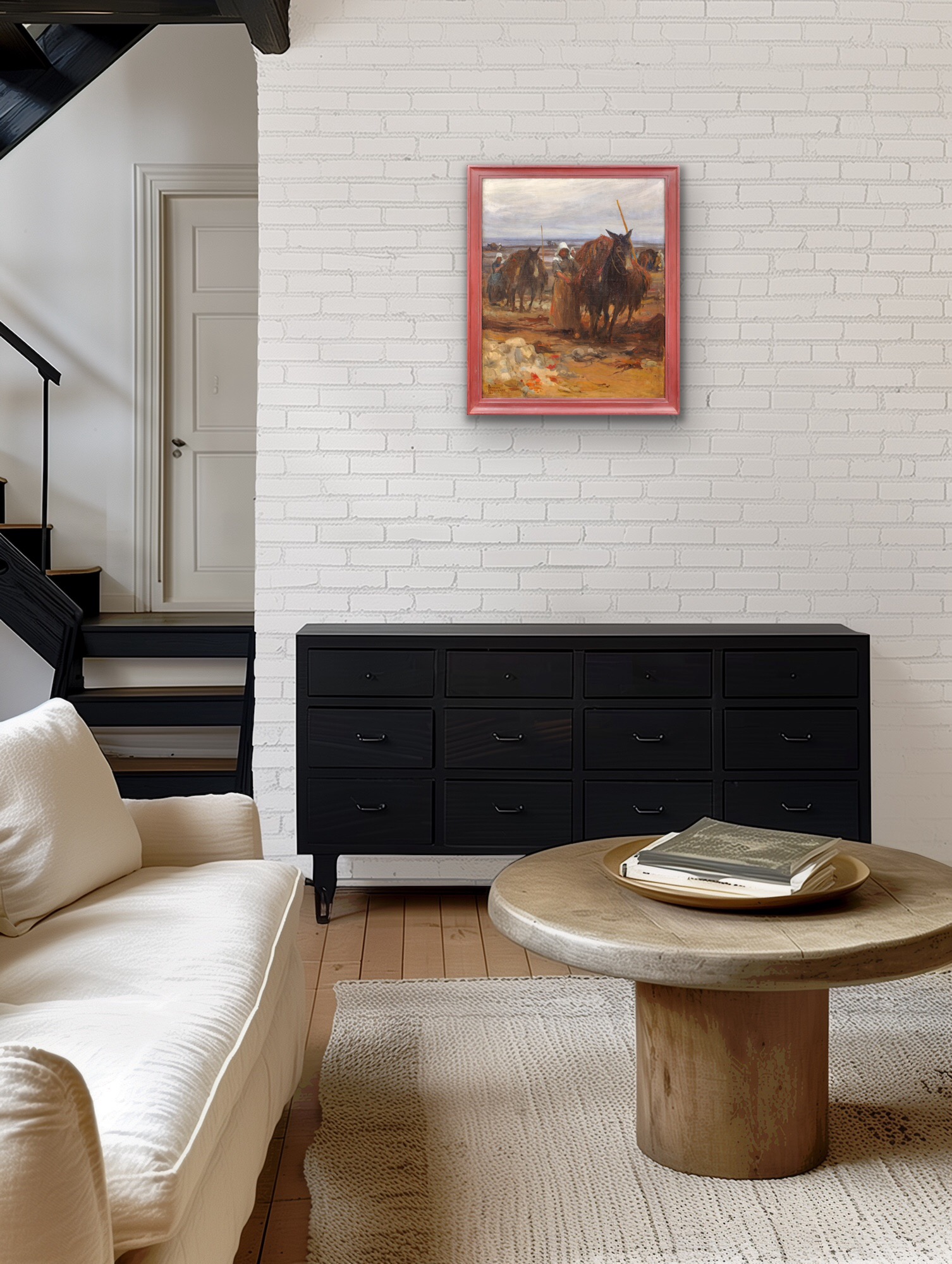
The painting is presented and supplied in a sympathetic contemporary replacement frame (which is shown in these photographs).
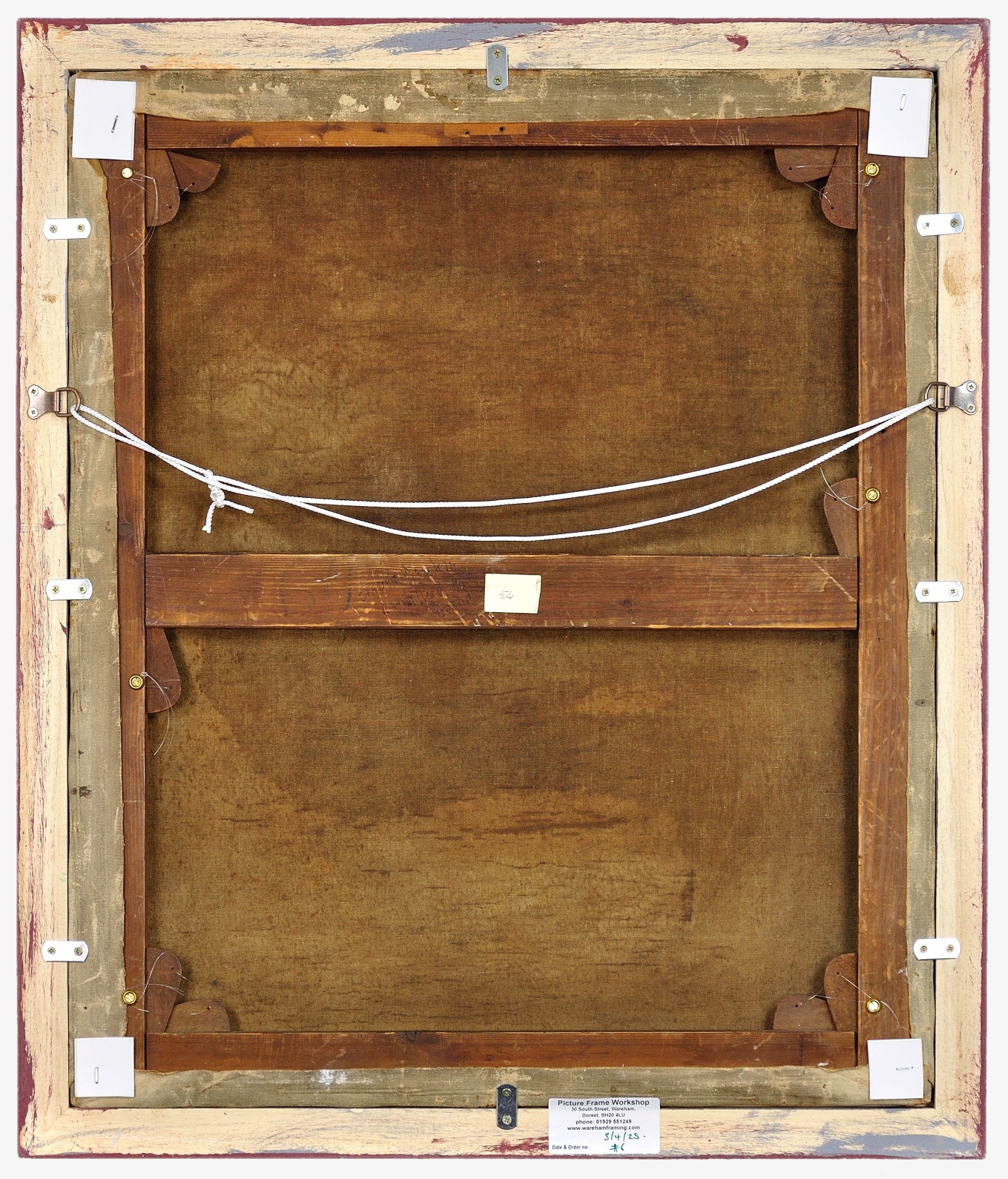
The canvas and the painted surface have both benefitted from cleaning and conservation, which was performed on our instruction, supervision and approval.
This antique painting is in a good condition. It wants for nothing and is supplied ready to hang and display.
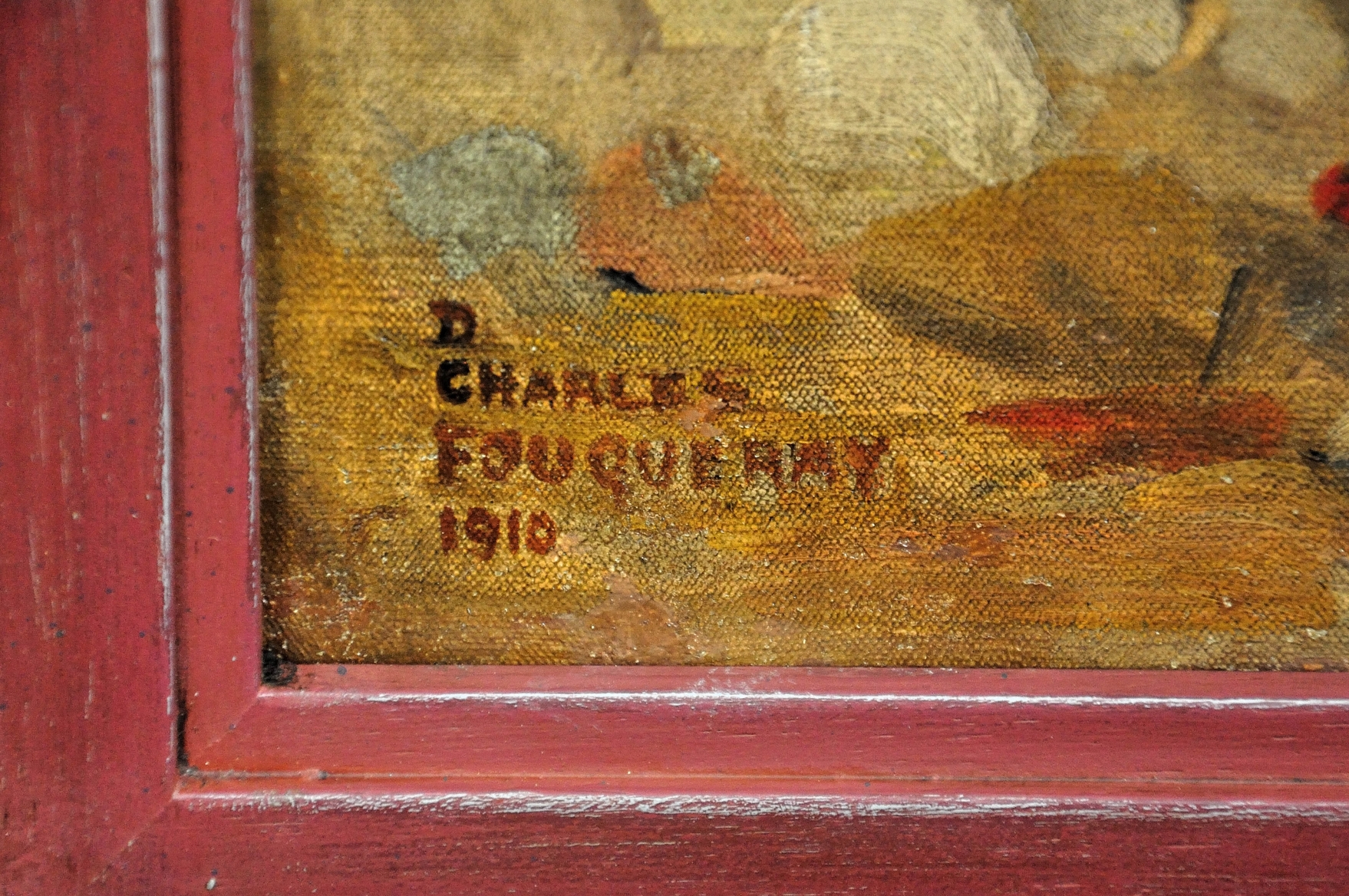
The painting is signed and dated 1910 lower left.
Charles Dominique Fouqueray was a French painter, illustrator, lithographer, and poster artist whose career was shaped by his lifelong fascination with the sea and maritime history. Born on 23 April 1869 in Le Mans to a baker from Fouras (Charente-Maritime), Fouqueray rose from modest beginnings to become an Official Painter of the French Navy and a member of the Académie des Beaux-Arts. He died in Paris on 28 March 1956, aged 86.
Fouqueray was admitted to the École des Beaux-Arts in Paris in 1887, where he studied under the celebrated painters Alexandre Cabanel and Fernand Cormon. Although he aspired to join the French Naval Academy, his weakness in mathematics prevented admission. Undeterred, he turned his artistic focus to the world of ships, sailors, and naval battles. He made his Salon debut in 1889 and, after his marriage to Alice Jansé in 1893, divided his life between Paris and the coastal town of Fouras, where he kept a house.
Fouqueray’s art, steeped in maritime themes, quickly brought him recognition. After unsuccessful applications in 1895 and 1902, he achieved his long-held ambition in 1908 when he was named Peintre Officiel de la Marine (Official Painter of the Navy).
His career blended fine art with illustration. From the 1890s he contributed to major periodicals, including Le Monde Illustré, L’Illustration, The Sphere, The Graphic, and The Illustrated London News. He illustrated significant works such as the Album Historique de l’Armée et de la Marine and a wide range of novels, often inspired by naval history, such as the Battle of Trafalgar. He illustrated several of Rudyard Kipling’s works. His canvases appeared at the 1900 Exposition Universelle in Paris.
Although he sold relatively few paintings, Fouqueray received numerous public commissions. He decorated town halls in Niort, Fouras, Le Bourget, Vincennes, and Montreuil, and created large decorative panels for the 1922 Colonial Exhibition in Marseille. In 1929, he was commissioned for the Hotel of the Emperor of Annam in Paris, Avenue de Lamballe, and tasked with executing the fresco of the municipal council chamber of Montreuil (Sine-Sanit-Denis). He also designed several French postage stamps. International commissions included the Palais des Congrès in Buenos Aires (1932), the cathedral of Gaspé in Canada (1933), and the Palace of Fontainebleau (1943).
A work considered to be Fouqueray’s most important painting of World War I may be found hanging in the Museum of Great War in Versailles.
The French Navy, recognising his interest in the Middle East, commissioned three monumental works inspired by Saudi Arabia: Les Quais d’El Waldi (1943), Le Débarquement des Pèlerins à Djeddah, and Pèlerin à Djeddah (1946). Two of these were exhibited at the Salon, in 1943 and 1946. Fouqueray also contributed to the decoration of numerous Navy buildings, including the Duquesne.
Fouqueray’s reputation was further enhanced by his travels. Between 1917 and 1919 he journeyed extensively through the Middle East, Greece, Turkey, Syria, and Palestine, producing thousands of watercoloured sketches. Between 1917 and 1924 he made repeated visits to the Arabian Peninsula, drawing inspiration from its landscapes, architecture, and people. These journeys profoundly shaped his later work, steering him toward an orientalist style that brought widespread acclaim and numerous commissions for posters, lithographs, and illustrated books.
Fouqueray’s artistry earned him significant recognition:
• Rosa Bonheur Prize (1909)
• Gold Medal for Engraving (1920)
• Indochina Prize (1914; though travel was delayed by war until 1921)
• Named Chevalier of the Légion d’Honneur
• Elected to the Académie des Beaux-Arts
At the start of his career, Fouqueray’s paintings leaned toward historical and genre scenes, but it was his orientalist and maritime works that secured his reputation. His legacy encompasses a vast and varied body of work: history paintings, oriental studies, posters, book illustrations, postage stamps, and public murals.
Today, Charles Dominique Fouqueray is remembered as one of the foremost maritime painters of his generation—a bridge between traditional naval history painting and the exoticism of French orientalist art. His work can be found in many museums in France and around the world. His students include Maurice Ménardeau.
© Big Sky Fine Art
This original oil on canvas painting by the renowned French artist Charles Dominique Fouqueray (1869–1956), titled Seaweed Gatherers (Ramasseurs de Goémon en Bretagne), was painted in 1910 and is signed and dated in the lower left corner.
The composition captures a vivid coastal scene in Brittany, where women in traditional dress lead horses burdened with heavy loads of freshly gathered seaweed. Set against a muted shoreline under a wide, atmospheric sky, the painting reflects Fouqueray’s characteristic blend of maritime realism and painterly impression. The earthy tones of the sand and seaweed contrast with the pale garments of the Breton women, highlighting both the hardship and dignity of their work.
Fouqueray, celebrated as an Official Painter of the French Navy, was widely admired for his maritime subjects and his ability to document life connected to the sea. While he is best known for naval and orientalist works, Seaweed Gatherers demonstrates his deep interest in the traditions of coastal communities in France.
This painting is an important example of early 20th-century French maritime art, combining social history with artistic sensitivity, and stands as a testament to Fouqueray’s skill in capturing the human and cultural life of Brittany.
 Ramasseurs De Goemon En Bretagne, 1910.......( "Seaweed Gatherers In Brittany" ) - Fouqueray, Charles