

Luciano Sopelsa
Italian ( b.1921 - d.2010 )
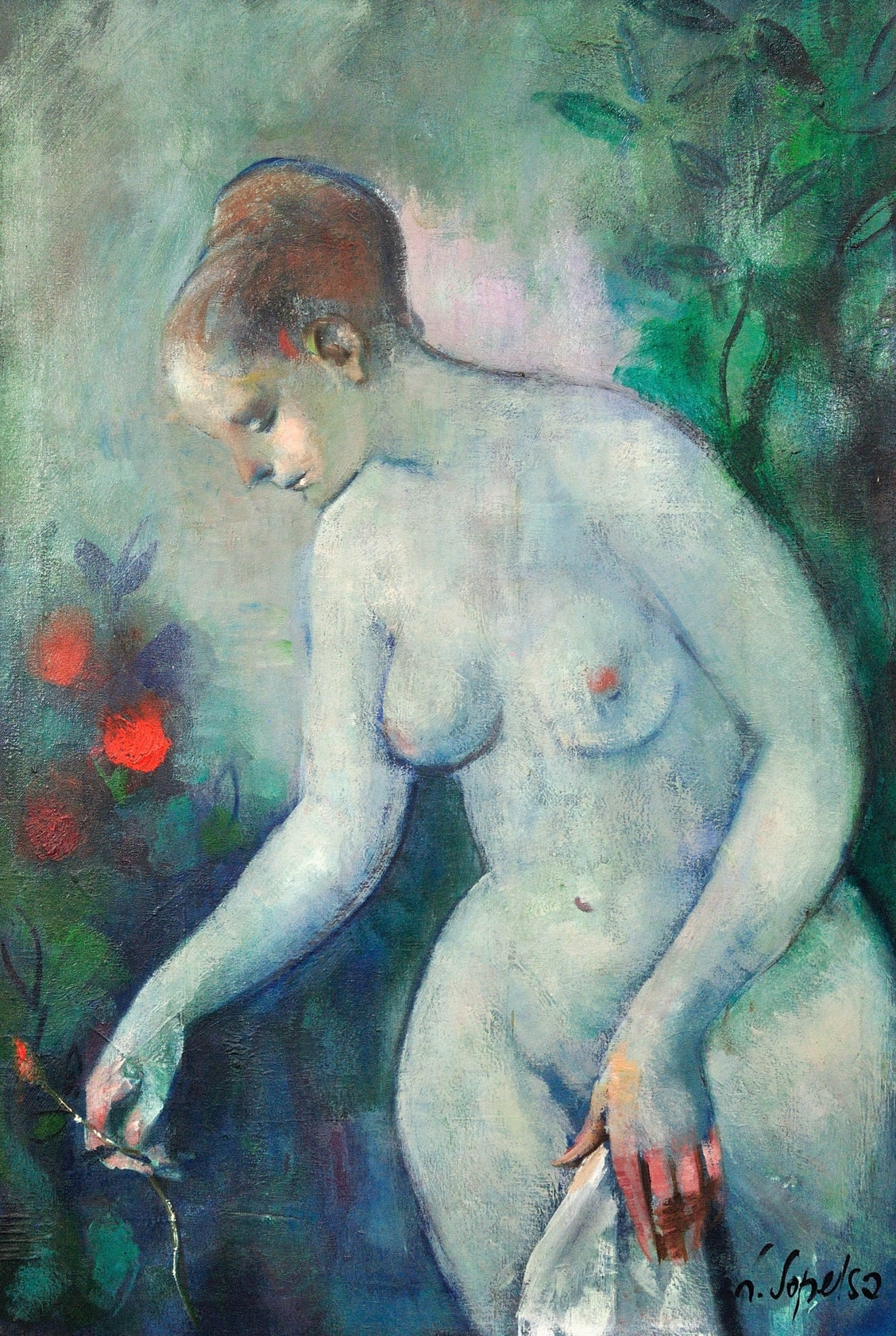
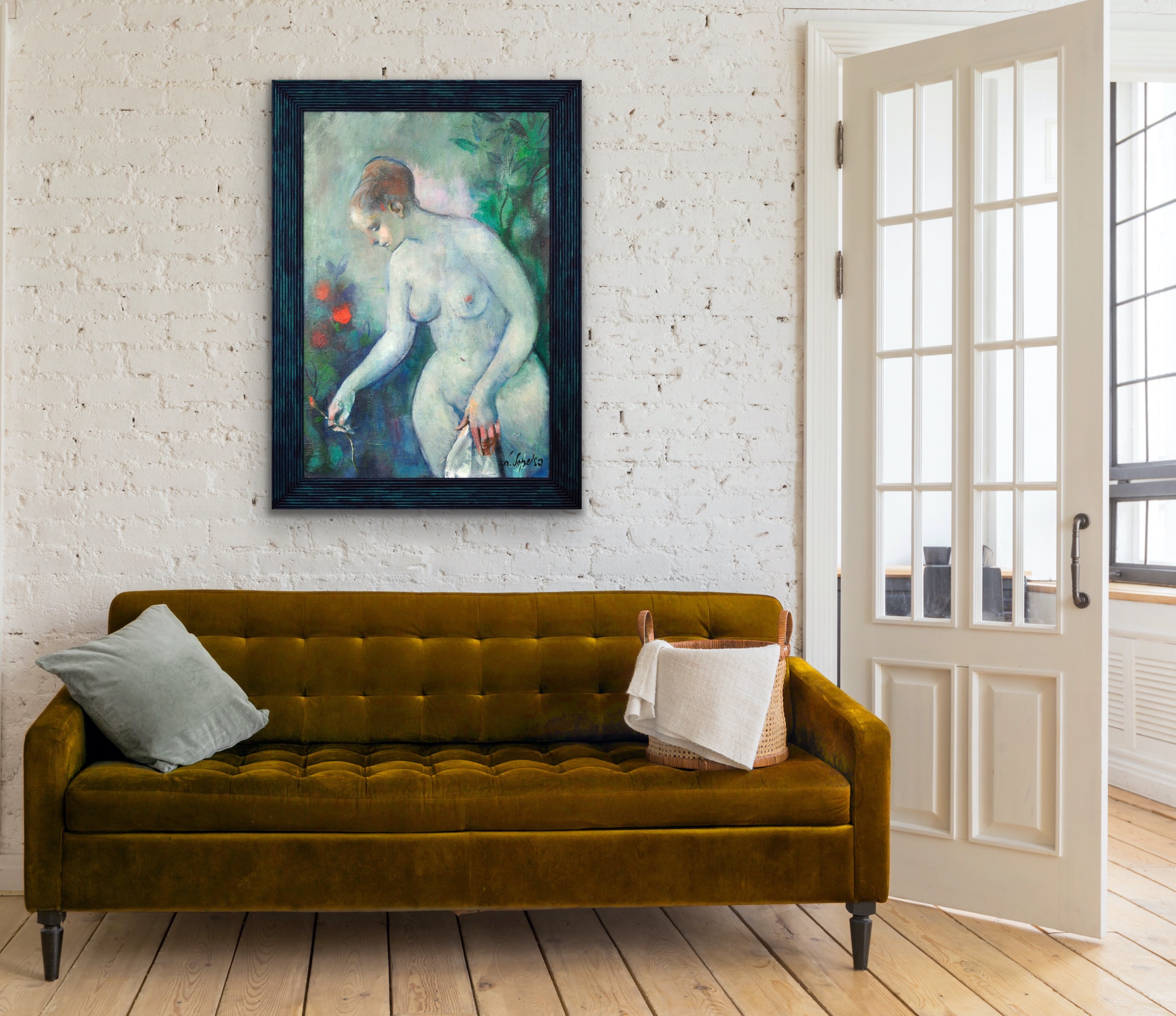
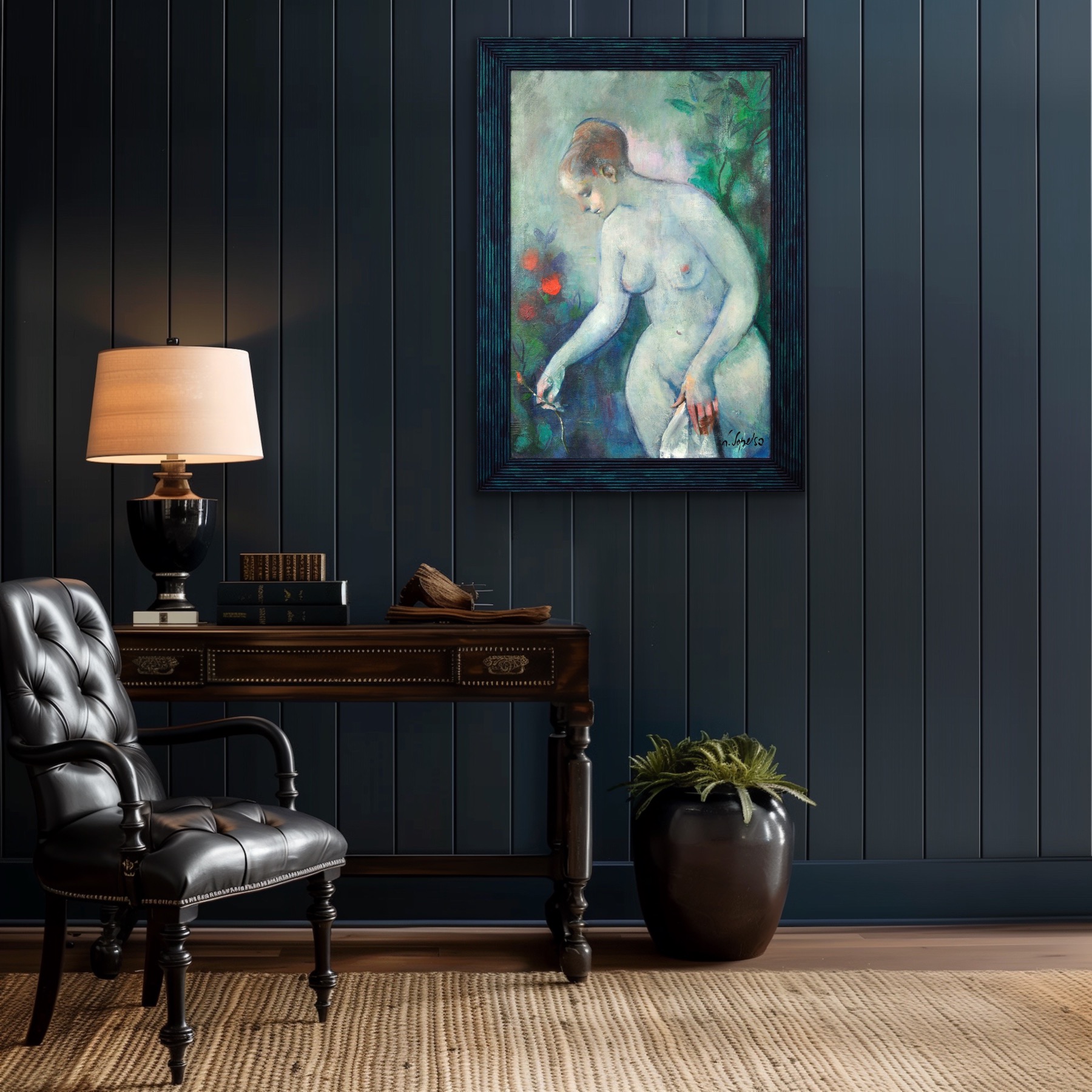
Nudo Al Tramanto (Nude At Sunset), 1975
| Image size | 34.3 inches x 22.8 inches ( 87cm x 58cm ) |
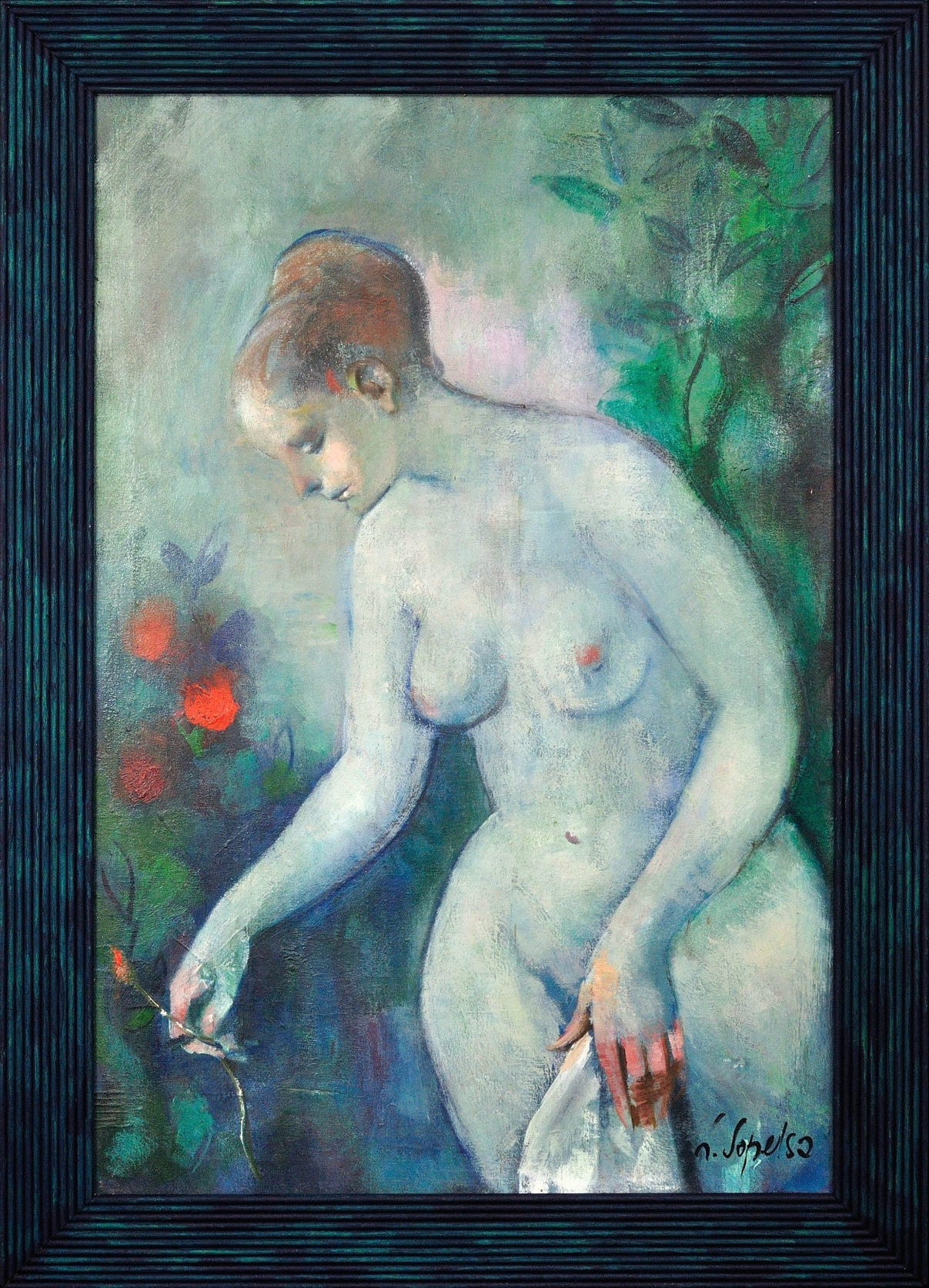
| Frame size | 40.2 inches x 28.5 inches ( 102cm x 72.5cm ) |
£2,795.00
Available for sale from Big Sky Fine Art in the English county of Dorset, this original oil painting is by the Italian artist Luciano Sopelsa and is dated 1975.
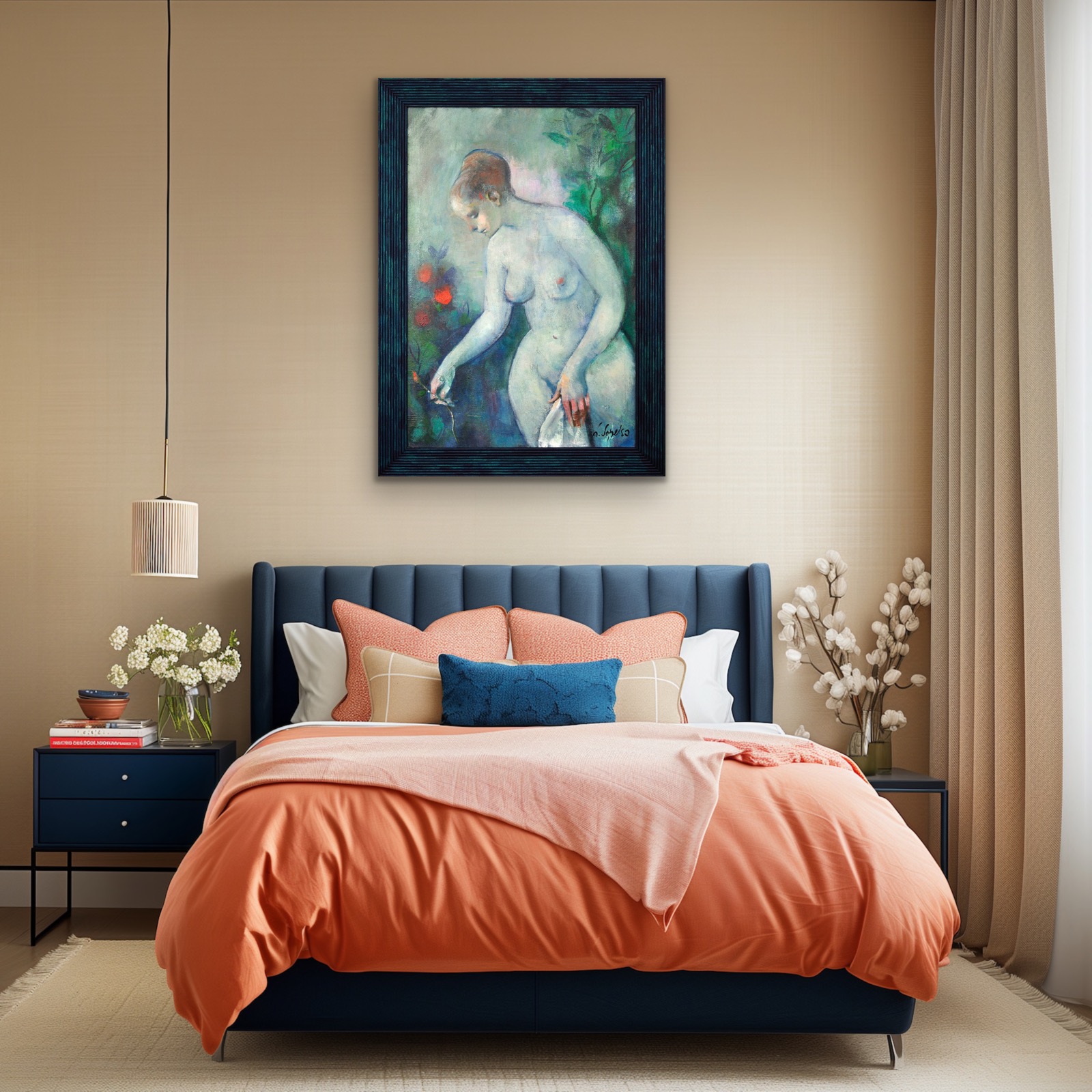
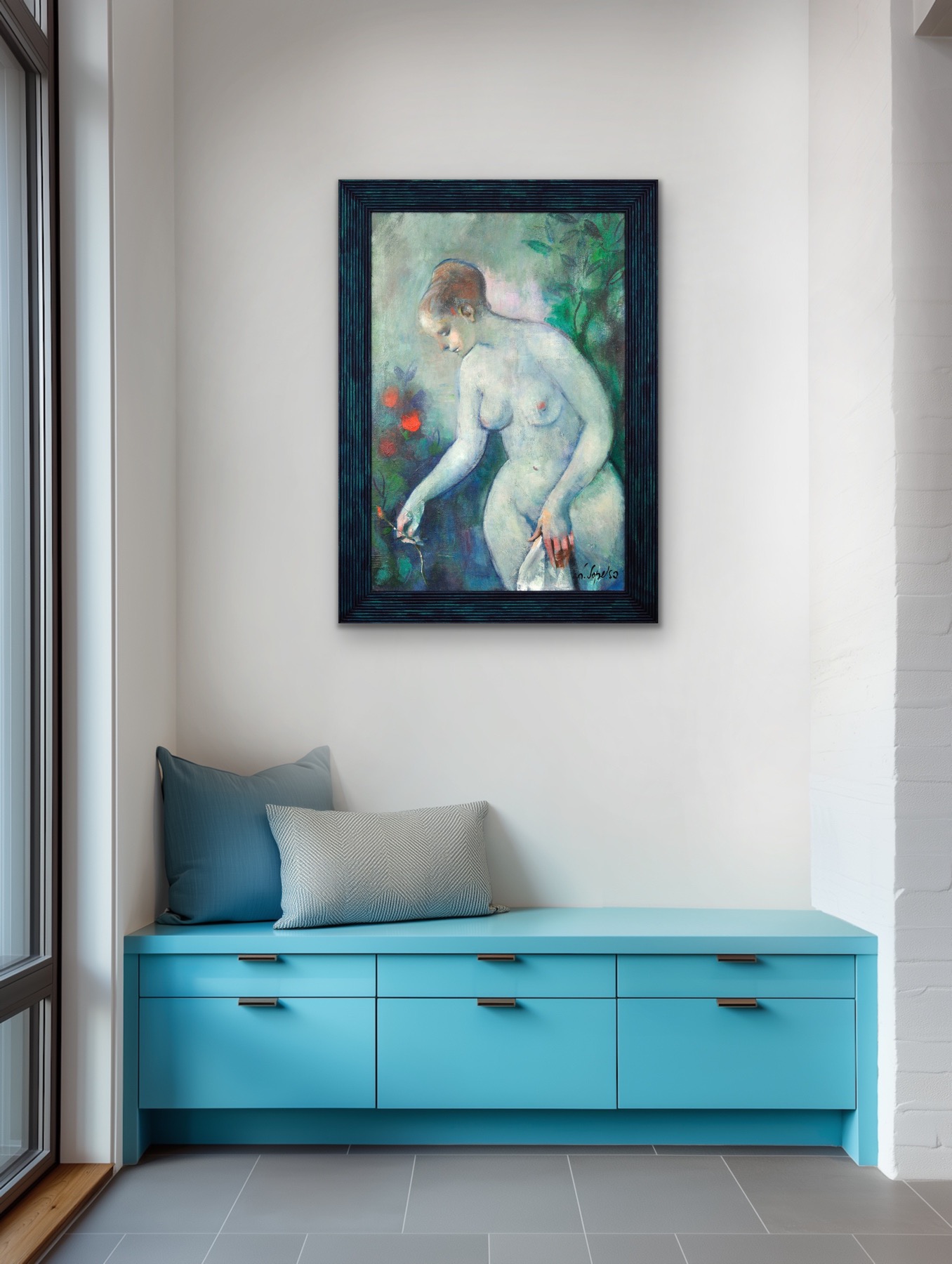
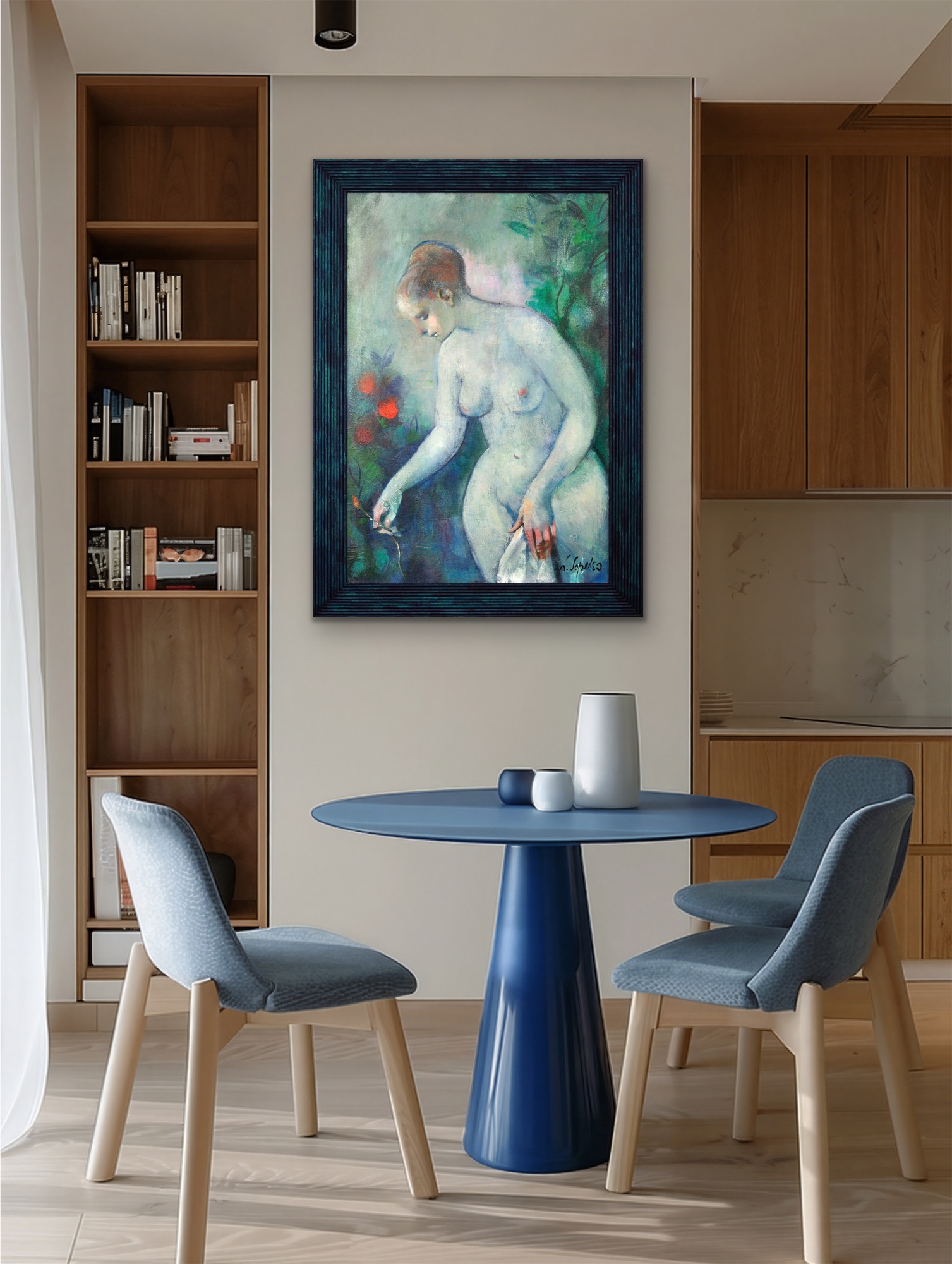
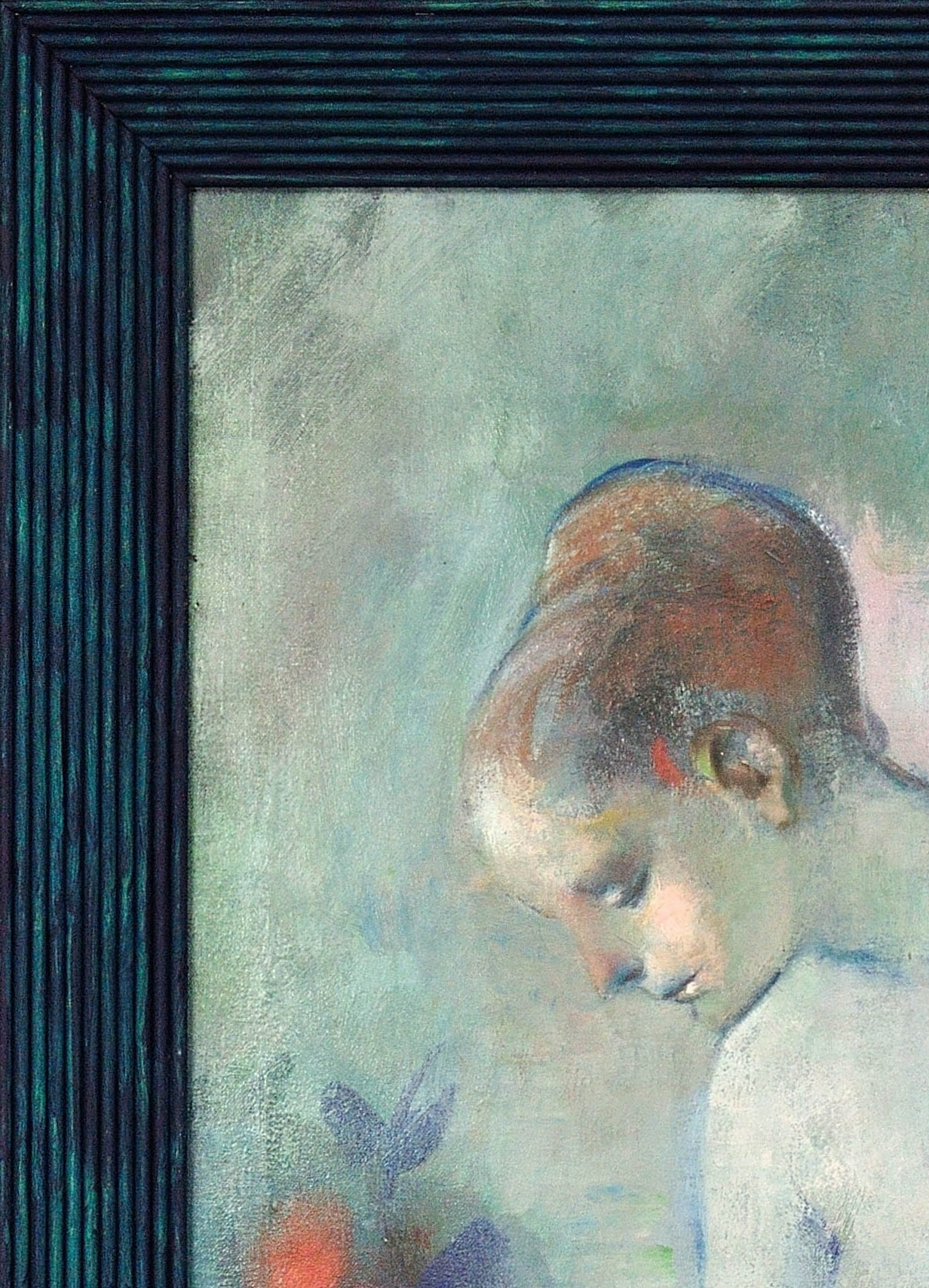
The painting is presented and supplied in its original wooden frame (which is shown in these photographs).
A professional repair to a 2cm perforation in the canvas has been performed whilst in previous ownership, probably within the last 20 years. The repair is sound and of good material integrity. The horizontal repair is marginally visible from the front, just to the right of the held flower stem.
This vintage painting is in very good condition, commensurate with its age. It wants for nothing and is supplied ready to hang and display.
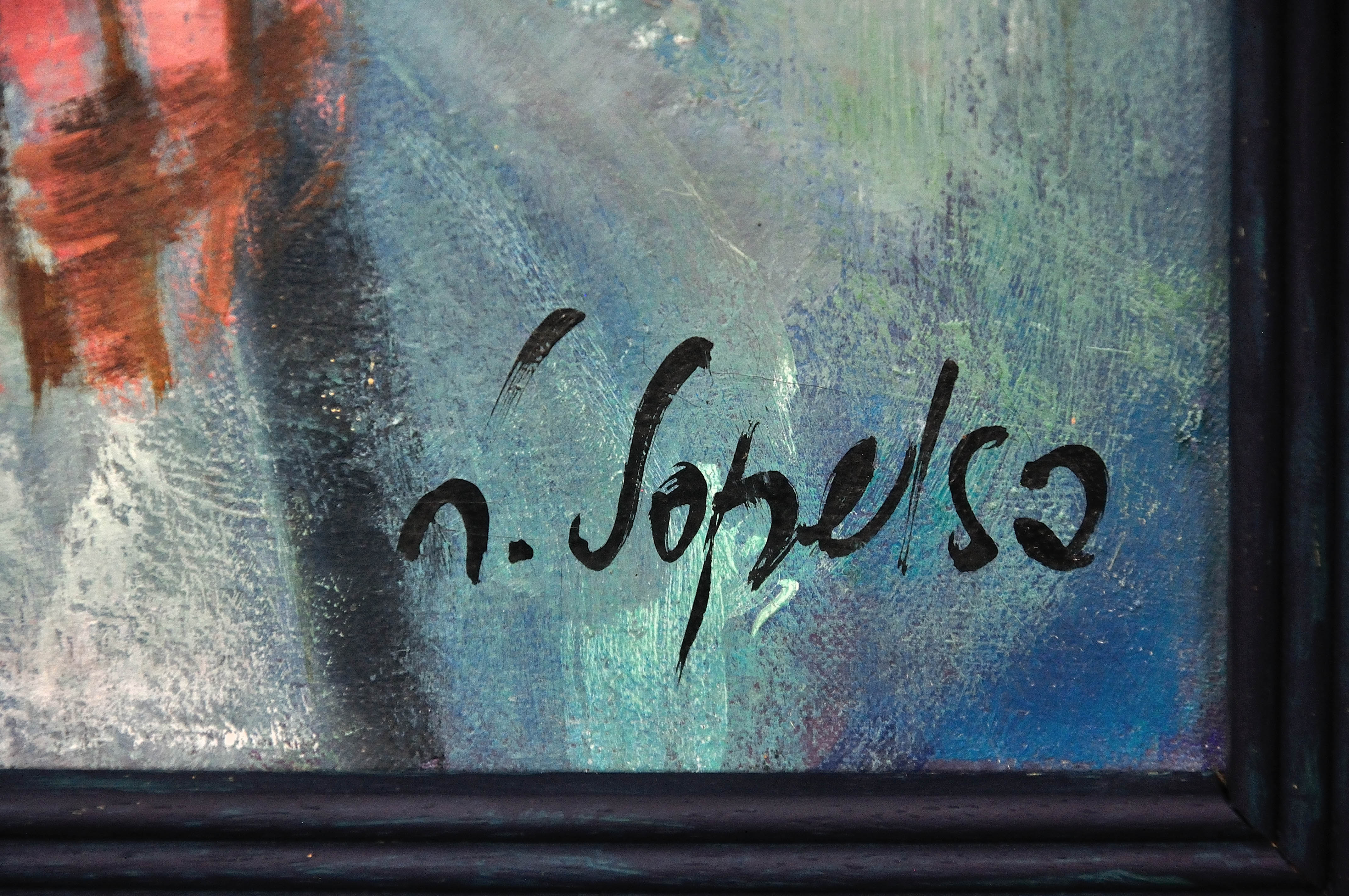
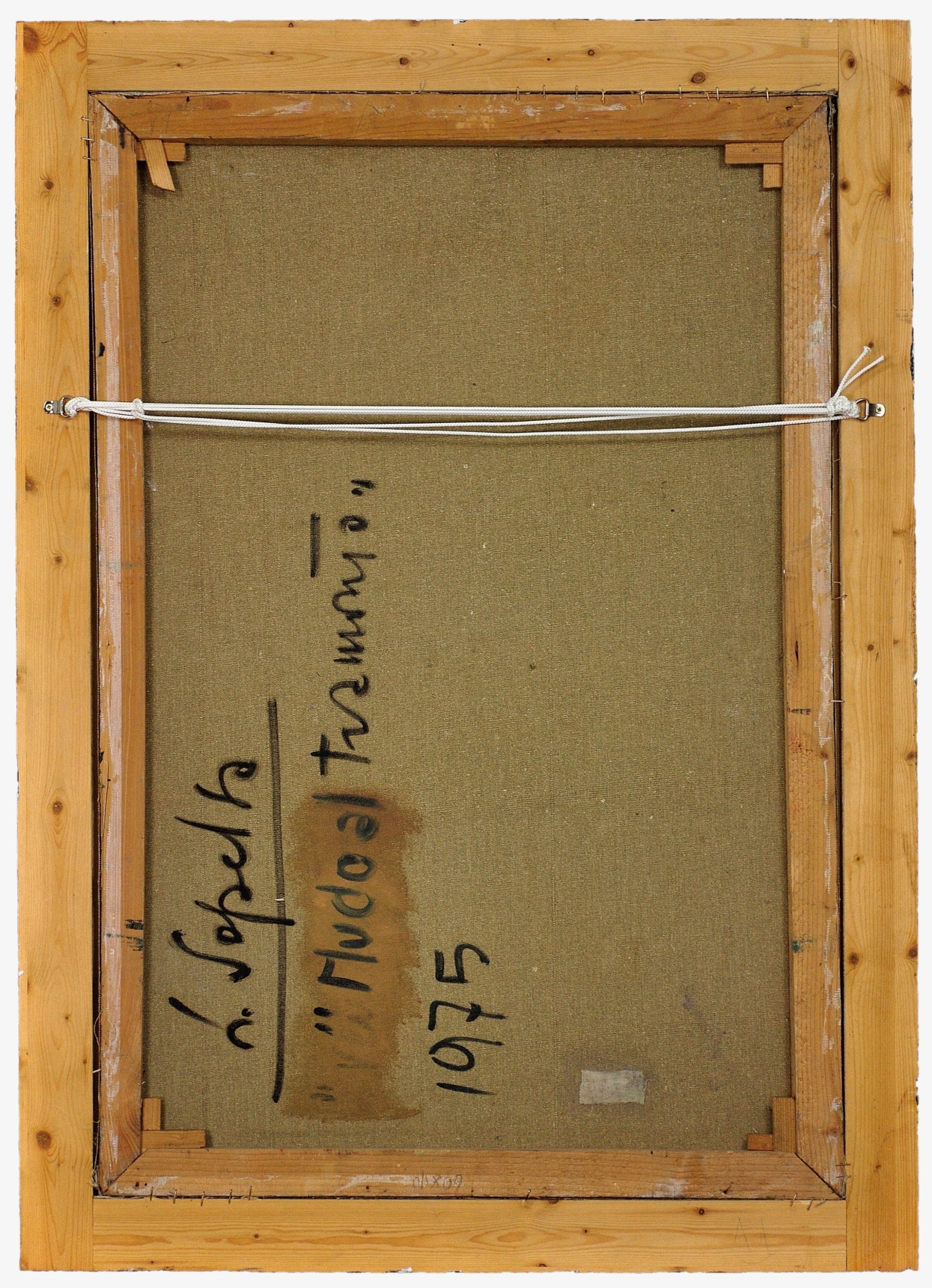
The painting is signed lower right and is signed again, titled and dated 1975 on the reverse of the canvas.
Italian artist Luciano Sopelsa (1921–2010) was a distinguished painter and sculptor whose career spanned more than six decades. Best known for his evocative figurative paintings, elegant female nudes and expressive religious subjects, Sopelsa combined the enduring traditions of Venetian art with a distinctly modern sensitivity to colour, atmosphere and form.
Born in Venice in 1921, Sopelsa received his artistic education at the Liceo Artistico di Venezia before enrolling in 1940 at the Accademia di Belle Arti di Venezia, where he studied under the celebrated Italian painter Bruno Saetti. Recognising his exceptional ability, Saetti invited Sopelsa to become his assistant, collaborating on the preparation of cartoons and the execution of frescoes—an experience that profoundly influenced the young artist’s technical mastery and lifelong appreciation of colour and monumental composition.
Building upon this classical training, Sopelsa established an independent artistic career distinguished by technical versatility. Alongside his easel paintings, he undertook numerous commissions in fresco and mosaic, demonstrating a deep understanding of traditional Italian decorative arts while developing an increasingly personal visual language. Later in his career he also turned to sculpture, working particularly in red marble, where his painter’s understanding of light and volume translated naturally into three-dimensional form.
Sopelsa’s paintings are characterised by their lyrical treatment of the human figure, harmonious colour relationships and quiet emotional resonance. His favourite subjects included female nudes, maternities, harlequins, landscapes and sacred themes, all rendered with expressive brushwork that balances careful observation with poetic interpretation. While rooted in the Venetian figurative tradition, in our opinion his mature work possesses a distinctly modern quality, placing atmosphere and emotion above strict realism.
By the 1960s and 1970s Sopelsa had developed a fully individual artistic voice. His paintings from this period display a confident handling of light and colour, with softly modelled forms emerging from richly textured backgrounds. Whether depicting an intimate nude, a contemplative portrait or a religious composition, his work reveals an artist concerned less with narrative than with creating mood, harmony and enduring beauty.
Luciano Sopelsa remained actively engaged in his artistic practice throughout his later years. In October 2004, at the age of eighty-three, he exhibited alongside his daughter, the painter Buci Sopelsa, in the exhibition Lo Spazio del Corpo at the Padua Art Gallery. Bringing together Luciano’s sculptures and Buci’s paintings, the exhibition celebrated both the artistic individuality of father and daughter and the shared creative spirit that characterised the Sopelsa family. The exhibition explored the common emotional thread that united them as artists, despite their different media. The organisers described the family’s artistic talent as almost hereditary, quoting the critic Ruggero Sicurelli, who coined the expression “creativogenetica” (“creative genetics”) to describe the Sopelsa family, in which several members pursued artistic careers. The press release that accompanied the exhibition described the family’s domestic life in Venice as a very creative and culturally rich environment, with their house being frequented by artists, musicians and intellectuals.
Today Luciano Sopelsa’s work is represented in private collections and continues to attract collectors of twentieth-century Italian art. His paintings are appreciated for their painterly sophistication, decorative appeal and faithful continuation of the great Venetian tradition, while his sculptures and monumental works testify to the breadth of his artistic achievement. Combining classical craftsmanship with a modern painterly sensibility, Sopelsa occupies an important place among post-war Italian figurative artists. The work we offer here exemplifies his lyrical treatment of colour and light that makes Sopelsa’s mature paintings particularly appealing to collectors of twentieth-century Italian figurative art.
© Big Sky Fine Art
A beautifully atmospheric original oil on canvas by the acclaimed Italian artist Luciano Sopelsa (1921–2010), Nudo al Tramonto (Nude at Sunset) is a striking example of the artist’s lyrical approach to the female figure. Painted in 1975, this elegant composition captures a moment of quiet introspection, depicting a nude woman gently bending amongst flowers as the fading light of evening dissolves the boundary between figure and landscape.
Rendered in Sopelsa’s characteristically soft, expressive brushwork, the painting is imbued with a dreamlike quality. Delicate tonal transitions of cool blue, sage green and muted lavender envelop the figure, while vivid crimson blossoms provide vibrant accents that draw the eye through the composition. The subtle modelling of the body, combined with the hazy, almost impressionistic background, creates an atmosphere of tranquillity and poetic contemplation. Rather than presenting the nude as a purely academic study, Sopelsa infuses the subject with sensitivity, grace and humanity, producing a work that feels both timeless and deeply personal.
The composition demonstrates the artist’s confident handling of colour and light. The cool luminosity of the figure contrasts beautifully against the rich foliage, suggesting the final glow of sunset from which the painting takes its title.
Executed in oil on canvas, the painting is signed by Luciano Sopelsa in the lower right corner and is additionally signed, titled and dated 1975 on the reverse, confirming its authenticity and provenance. Works of this quality from the artist’s mature period are increasingly sought after by collectors of twentieth-century Italian art, figurative painting and modern European oils.
Nudo al Tramonto is an exceptional decorative and investment-quality work, equally suited to a private collection or sophisticated interior. Its refined palette, evocative mood and elegant treatment of the female form make it a compelling example of post-war Italian figurative painting and a fine addition to any collection of original modern art.
 Nudo Al Tramanto (Nude At Sunset), 1975 - Sopelsa, Luciano