

Andre Minaux
French ( b.1923 - d.1986 )
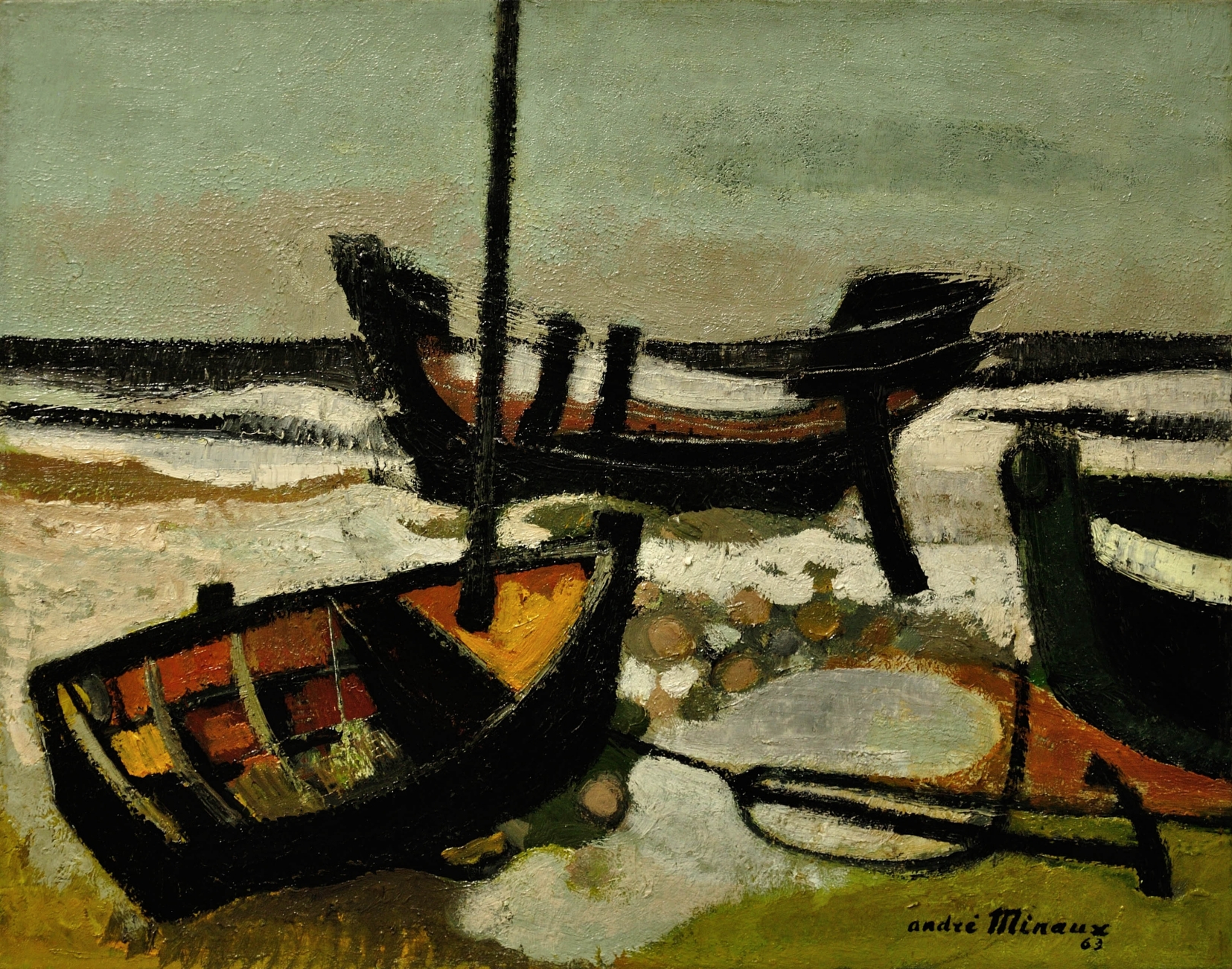
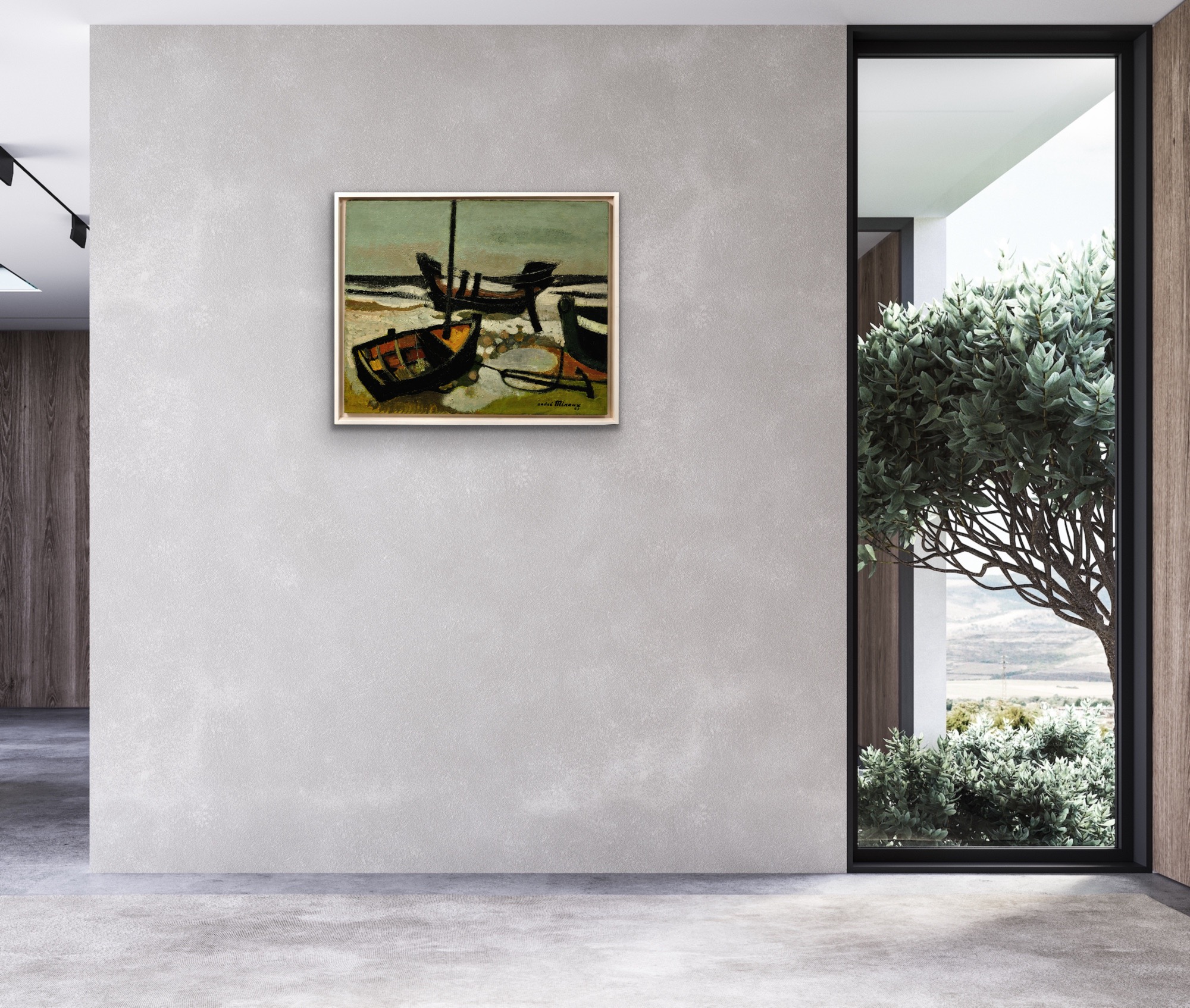
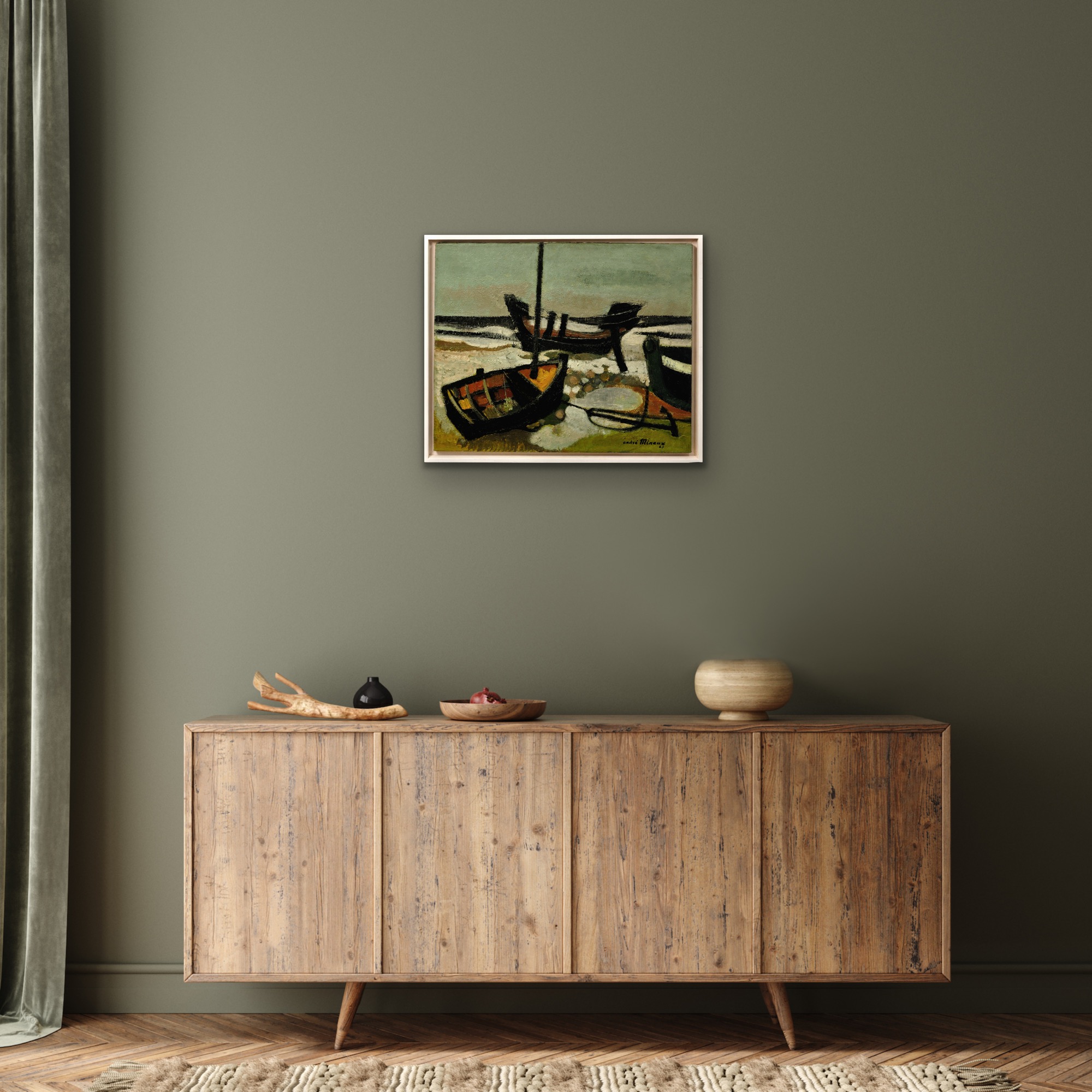
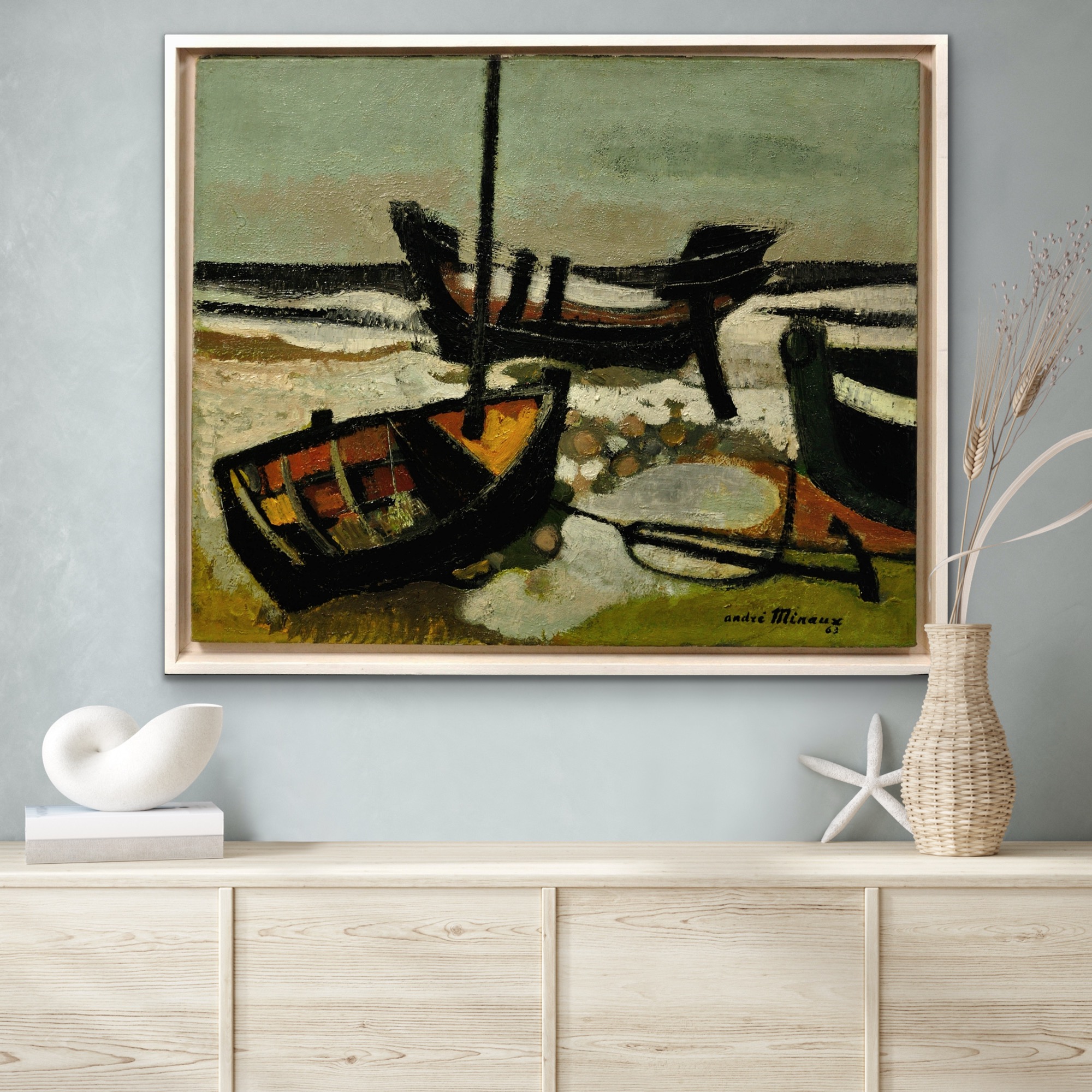
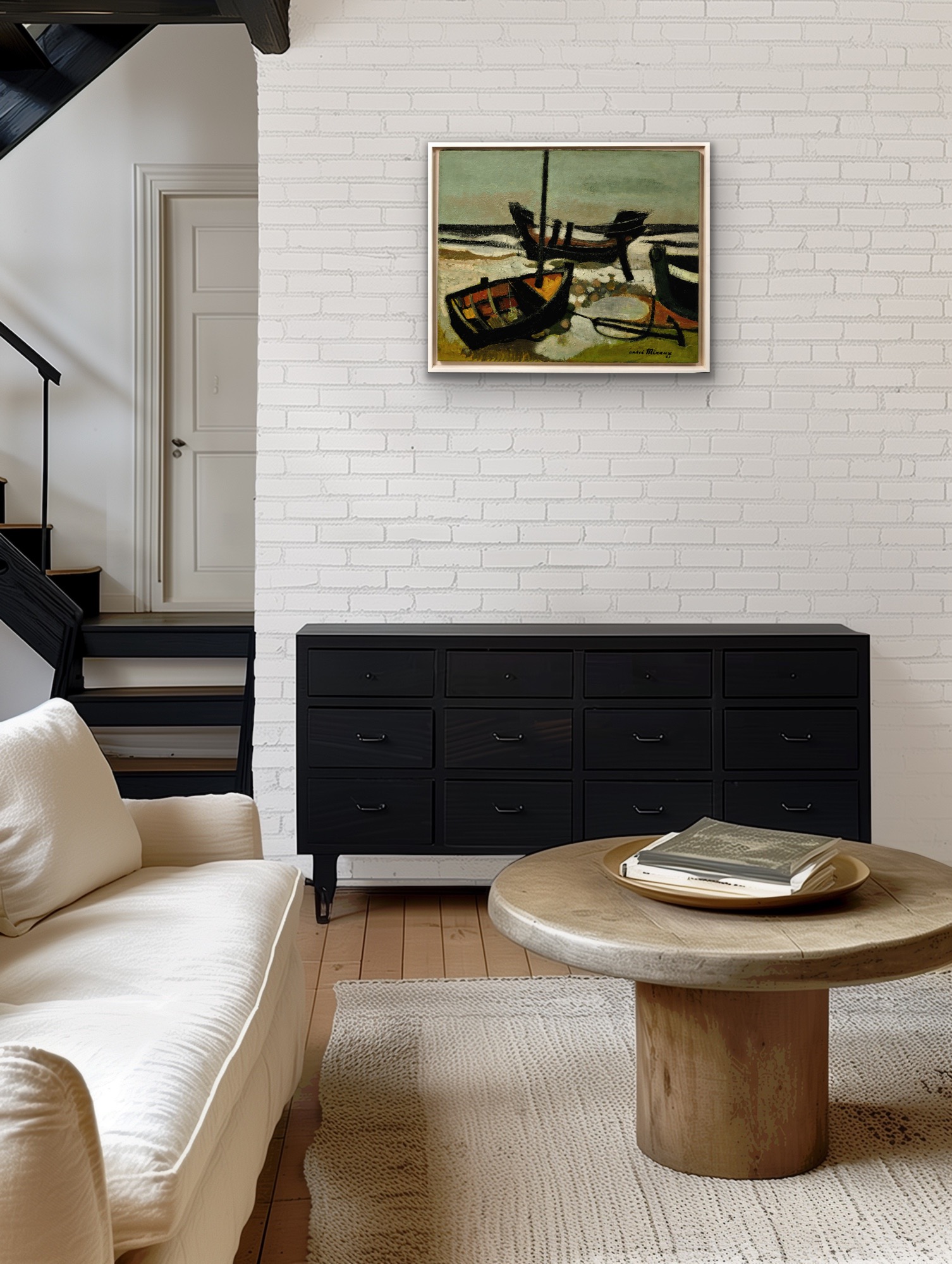
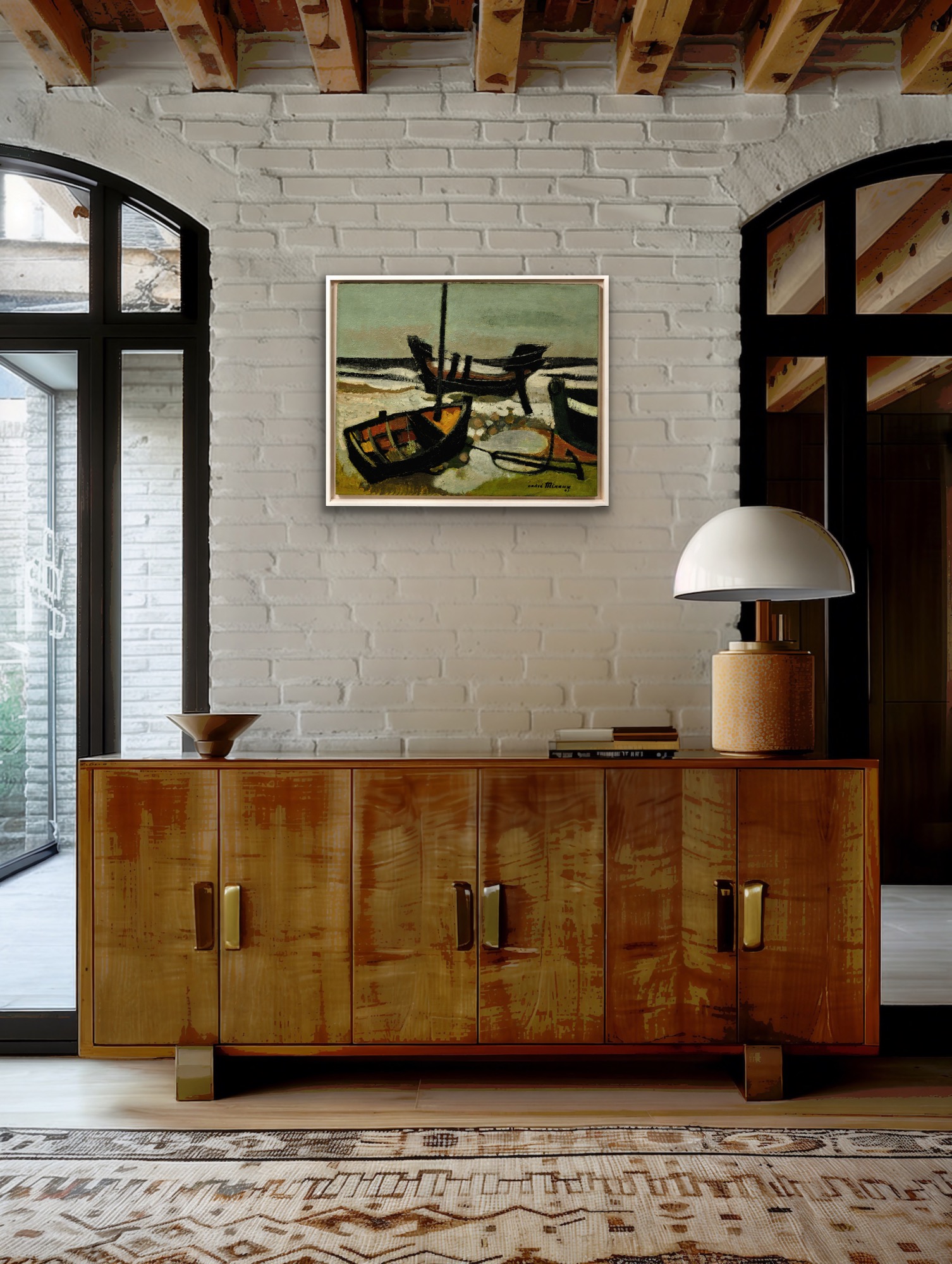
Les Barques Échouées, 1963
| Image size | 21.3 inches x 25.6 inches ( 54cm x 65cm ) |
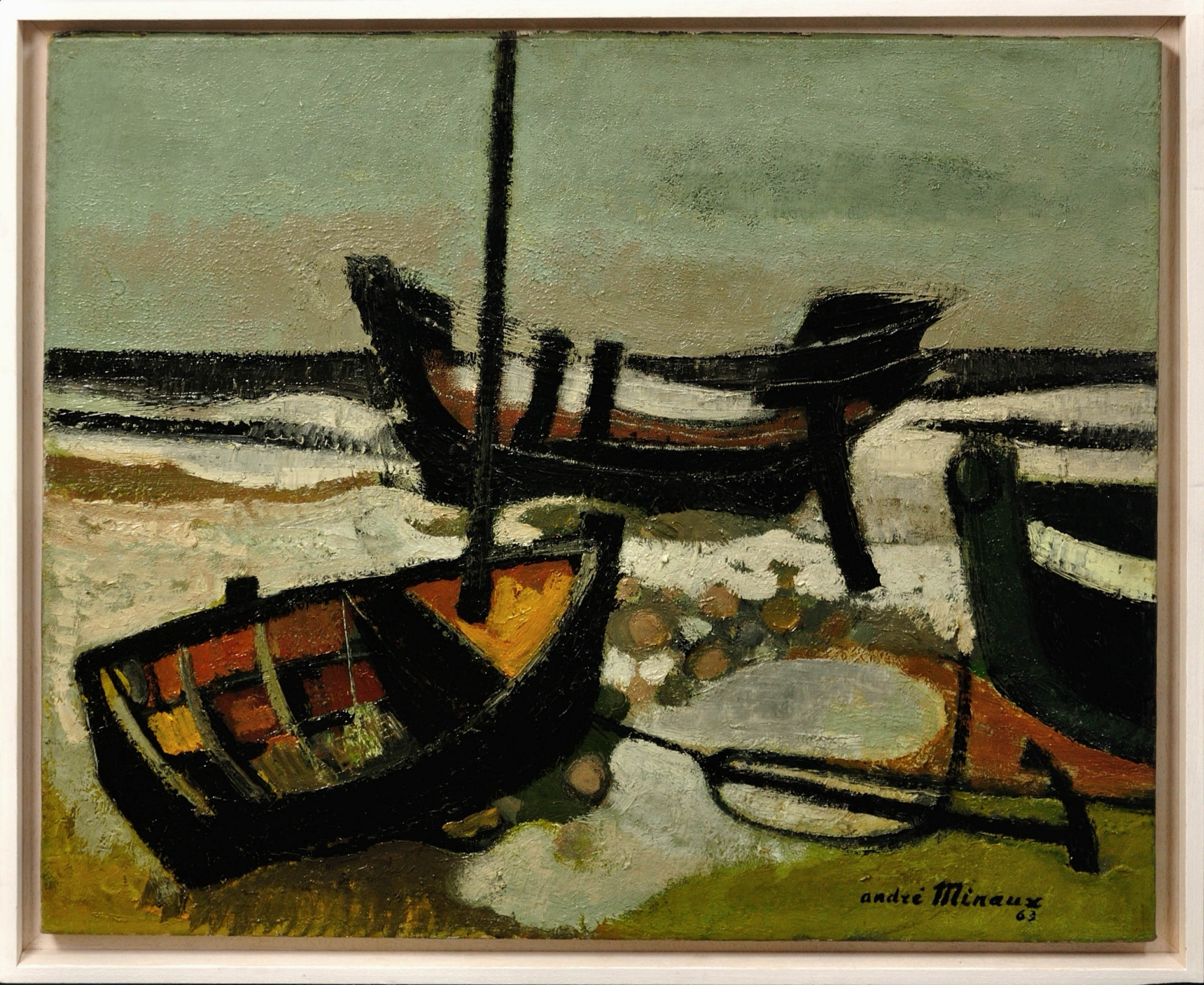
| Frame size | 23.2 inches x 27.8 inches ( 59cm x 70.5cm ) |
£3,495.00
Available for sale from Big Sky Fine Art in the English county of Dorset, this original oil painting is by the French artist André Minaux and is dated 1963.
The painting is presented and supplied in a replacement frame (which is shown in these photographs) which dates from the last thirty years or so.
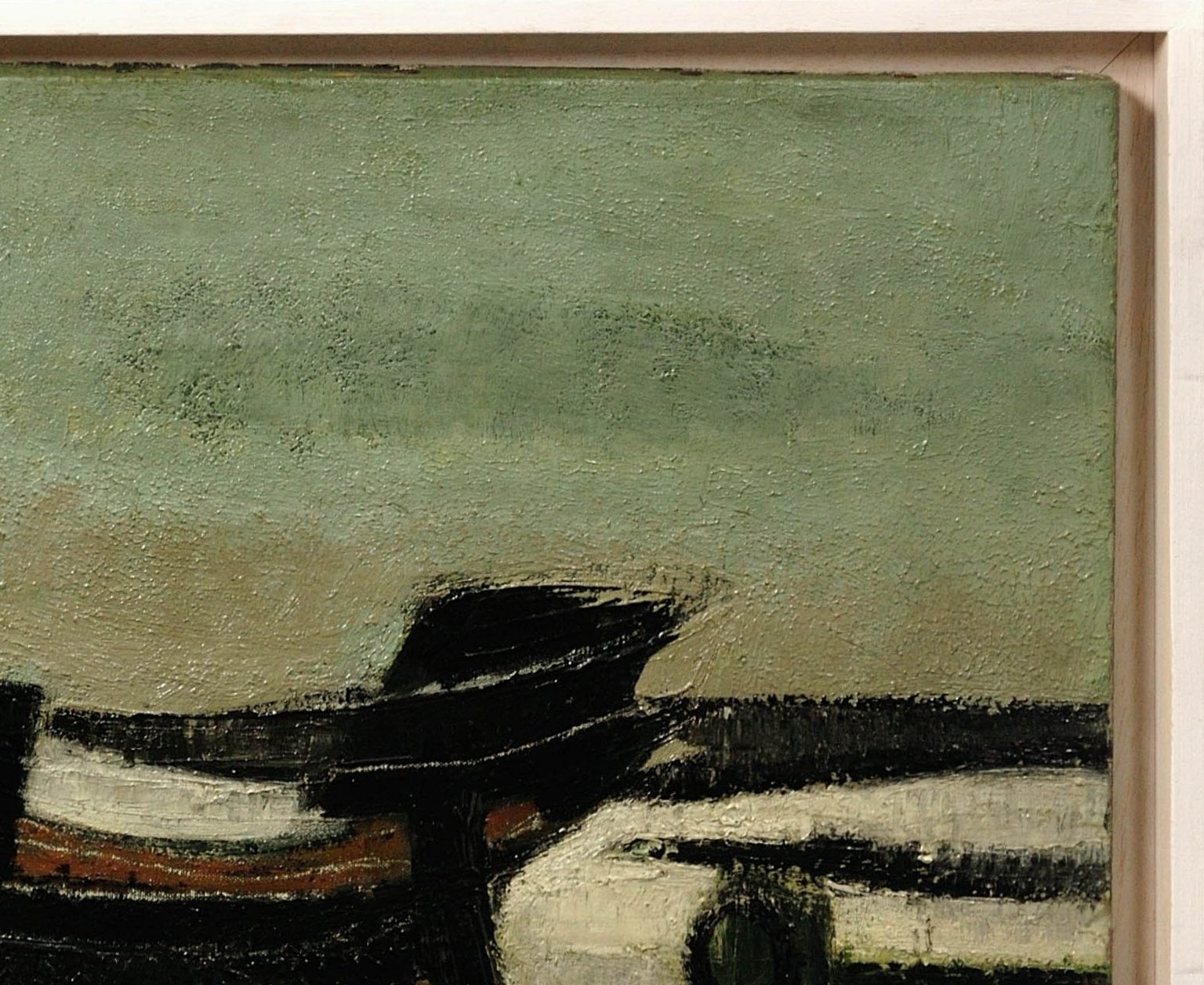
The canvas and the painted surface have benefitted from cleaning and conservation, which was performed on our instruction, supervision and approval.
This vintage painting is in very good condition, commensurate with its age. It wants for nothing and is supplied ready to hang and display.
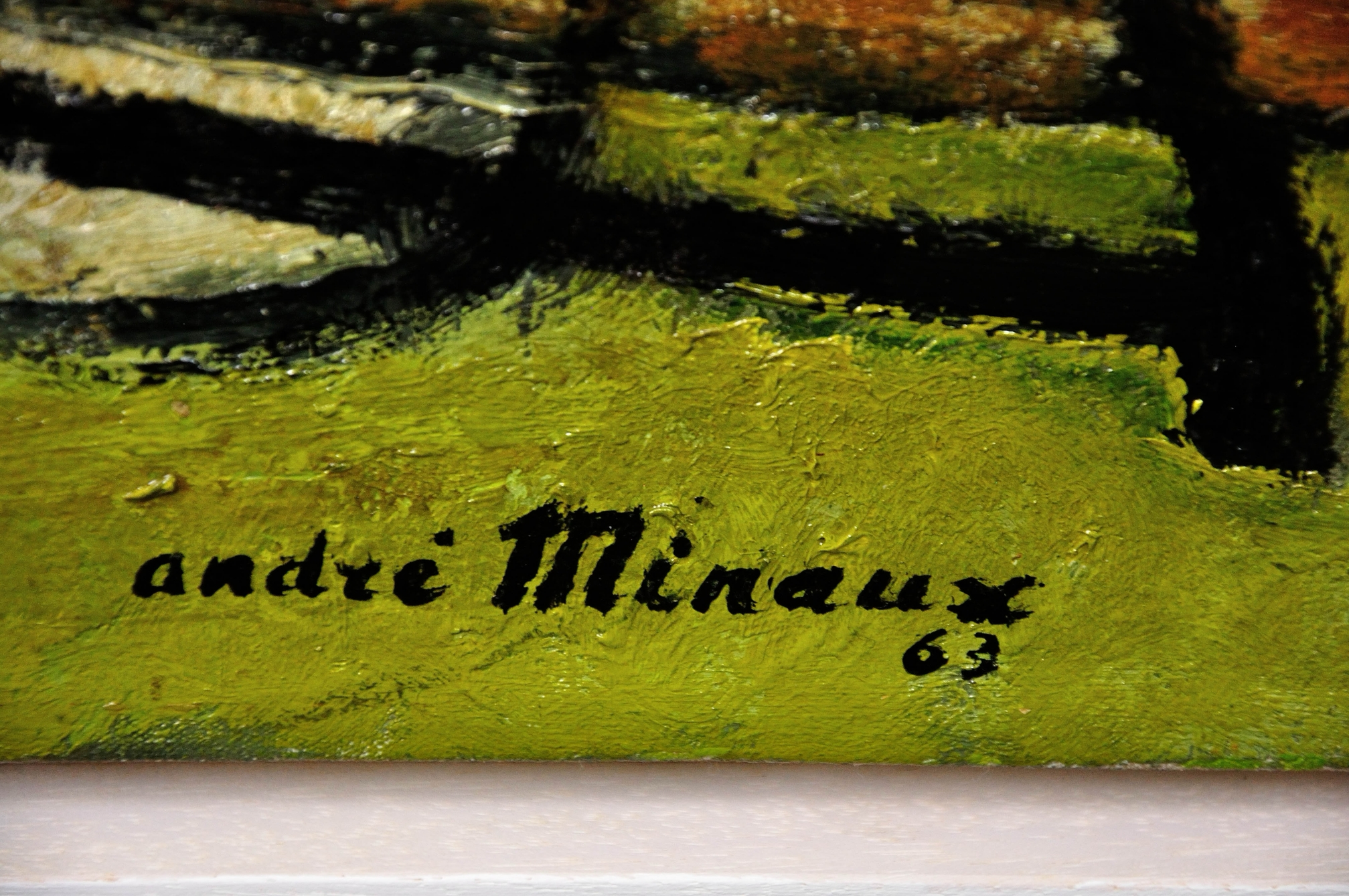
The painting is signed and dated 1963 lower right.
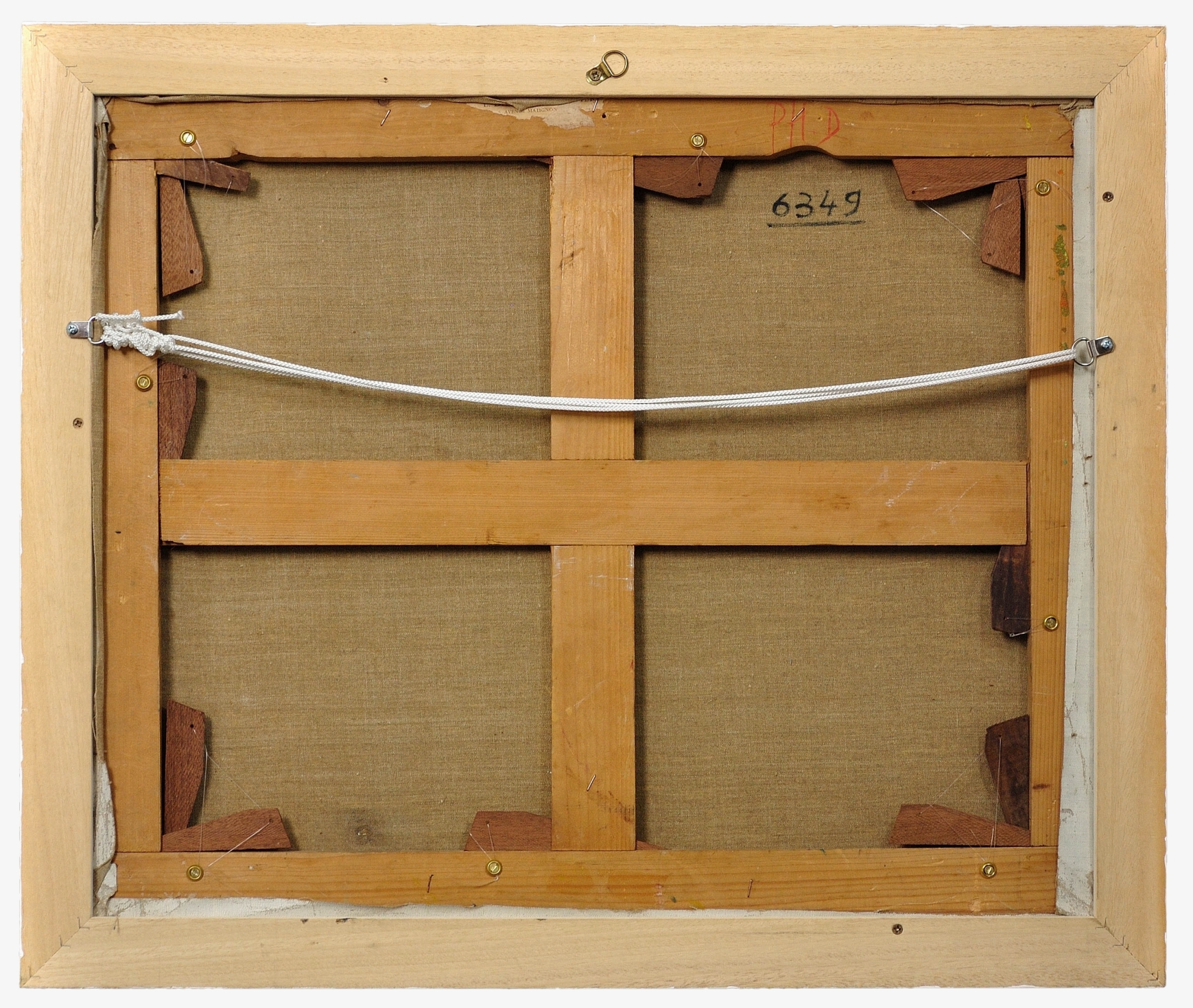
Previously with the gallery of Emmanuel David et Maurice Garnier, 6 Avenue Matignon, Paris 8e.
André Minaux was a French painter, draughtsman, lithographer, engraver, illustrator and sculptor, and an important representative of the post-war generation associated with the École de Paris and the Jeune Peinture movement. Born in Paris on 5 September 1923, he developed an early interest in drawing and painting and studied at the École Nationale Supérieure des Arts Décoratifs in Paris during the war years, where his teachers included Maurice Brianchon and Roland Oudot.
Minaux began exhibiting while still a very young artist. He showed at the Salon d’Automne during the 1940s and subsequently exhibited at the Salon des Indépendants, Salon de Mai and other important Parisian salons. By the end of the decade he had become associated with a generation of young painters seeking to reassert the importance of the human figure and observable reality at a time when abstraction was becoming increasingly dominant in French art.
In 1949 Minaux participated in the second exhibition of L’Homme Témoin, a group associated with painters including Bernard Lorjou, Paul Rebeyrolle and Bernard Buffet. The movement advocated a renewed engagement with everyday life and the human condition, and its painters became associated with a vigorous form of post-war figurative realism. Minaux’s early paintings, with their sombre colours, emphatic drawing and concentration upon ordinary people and objects, fitted naturally within this environment. His work was sometimes connected with the contemporary tendency described as misérabilisme, although his subsequent career was considerably broader than that label suggests.
Recognition came quickly. In 1949, at the age of twenty-six, Minaux was awarded the prestigious Prix de la Critique, an important distinction for a young French artist. The following year the Musée d’Art Moderne de Paris acquired one of his paintings, establishing his place among the emerging painters of the post-war period.
During the 1950s his reputation became increasingly international. He participated in the Venice Biennale in 1952 and exhibited in London in 1953, including at the Adams Gallery. A painting was subsequently acquired by the Tate Gallery, and Minaux continued to exhibit extensively outside France, with exhibitions taking his work to Britain, the United States, Canada, continental Europe and Japan.
The paintings of this period frequently concentrate upon the tangible world: landscapes, agricultural subjects, fishermen and working people, still lifes and figures in interiors. His draughtsmanship remained fundamental. Forms are often enclosed by strong dark contours and constructed with a weight and solidity that can give even commonplace objects a monumental presence. His palette during the earlier part of his career was characteristically restrained and earthy, although ochres, greens, reds and increasingly stronger passages of colour gradually enlivened his compositions.
Minaux was nevertheless an artist whose work continually evolved. His rural landscapes of the 1950s became warmer and more expansive, while major figurative compositions allowed him to explore the relationship between traditional French realism and modern pictorial construction. One of the most ambitious was La Noce, conceived over several years and exhibited at the Maison de la Pensée Française in Paris in 1960. Measuring approximately 5.6 by 3 metres and containing some twenty figures, the painting was preceded by numerous preparatory studies and represented the culmination of this phase of his figurative work.
During the 1960s Minaux’s painting moved progressively away from naturalism. Figures, still lifes and landscapes remained recognisable, but their forms became increasingly simplified and stylised. Colour assumed greater independence, while the strong outlines already characteristic of his earlier work became part of a more deliberately constructed pictorial language. In his later career this process led him towards increasingly abstract and, eventually, non-figurative compositions.
This development is particularly relevant to paintings such as Les Barques Échouées of 1963. Although the boats and shoreline remain clearly recognisable, the painting is constructed through heavy black contours, flattened areas of colour and interlocking geometric forms. It stands at an interesting point in Minaux’s development, retaining the physical solidity of his earlier realism whilst anticipating the greater simplification and abstraction of his later work.
Alongside painting, Minaux became an accomplished printmaker and lithographer. He worked with the celebrated Mourlot printing atelier in Paris, whose presses produced lithographs by many of the leading artists of twentieth-century France. His involvement with lithography began in the late 1940s and developed into an important parallel strand of his career. His graphic work included independent prints as well as illustrations for bibliophile editions and literary works. The Bibliothèque nationale de France records his lithographs and cites the catalogue raisonné Minaux lithographe, 1948–1973.
Minaux also illustrated works by prominent writers, and later publications containing his original prints included works by Jean Giono, Albert Camus and Julien Gracq. His mastery of drawing and his ability to reduce a subject to strong, economical forms made printmaking particularly suited to his artistic temperament.
In his later years Minaux continued to experiment, extending his practice into engraving, aquatint, pastel and sculpture. Across these different media his work progressed through several distinct phases — from the sombre post-war realism of his youth, through rural and figurative painting, towards increasingly stylised compositions and finally abstraction. What remained remarkably consistent was the importance of line, structure and rhythm.
André Minaux died at Touquin, Seine-et-Marne, on 4 October 1986, aged sixty-three. His work had by then achieved considerable international recognition and entered important public collections. His prints are represented, amongst others, in the collections of the Musée d’Art Moderne de Paris and the National Gallery of Art, Washington, while his wider career brought his work into major French and international collections.
Today Minaux is recognised as a distinctive figure within post-war French figurative painting and the Nouvelle École de Paris. Although associated in his youth with the realism of L’Homme Témoin and Jeune Peinture, his long career resists confinement to a single movement. His progression from naturalism towards increasingly simplified and abstract forms demonstrates an artist continually reconsidering the relationship between observed reality, drawing, colour and pictorial structure.
© Big Sky Fine Art
An original 1963 oil on canvas by the important French modernist painter André Minaux (1923–1986), entitled Les Barques Échouées (The Beached Boats). The painting is signed and dated by the artist in the lower right.
Minaux depicts a group of fishing boats drawn up on the shore, their dark, strongly defined hulls arranged across a pale coastal landscape. In the foreground, an open boat lies at an angle towards the viewer, its interior picked out in warm tones of ochre, rust red and muted green. Beyond it, further boats are reduced to bold, almost sculptural forms against the shoreline and a softly modulated grey-green sky.
The composition is characteristically robust. Heavy black outlines and broad passages of paint give the boats considerable physical presence, while Minaux’s deliberately restrained palette creates a quieter atmosphere. Areas of chalky white and grey are punctuated by earthy reds, ochres and greens, bringing warmth and rhythm to an otherwise subdued coastal scene. The visible texture of the oil paint contributes further to the work’s tactile quality.
Rather than approaching the subject as a conventional maritime view, Minaux concentrates upon form, structure and the relationships between the boats themselves. Masts, hulls and sweeping curves create a series of intersecting verticals, diagonals and horizontal bands, giving the composition an almost abstract underlying geometry. Yet the subject remains immediately legible: working boats temporarily stranded by the retreating tide.
Painted in 1963, Les Barques Échouées belongs to the mature period of Minaux’s career and demonstrates the distinctive synthesis of figurative painting and modern abstraction for which his work became known. The strong draughtsmanship, simplified forms, expressive handling of paint and sombre but carefully balanced palette are all characteristic of his post-war French modernist style.
An atmospheric and substantial example of André Minaux’s marine and coastal painting, Les Barques Échouées combines the familiar subject of fishing boats on the shore with the powerful construction and expressive economy that distinguish his work.
© Big Sky Fine Art
 Les Barques Échouées, 1963 - Minaux, Andre